


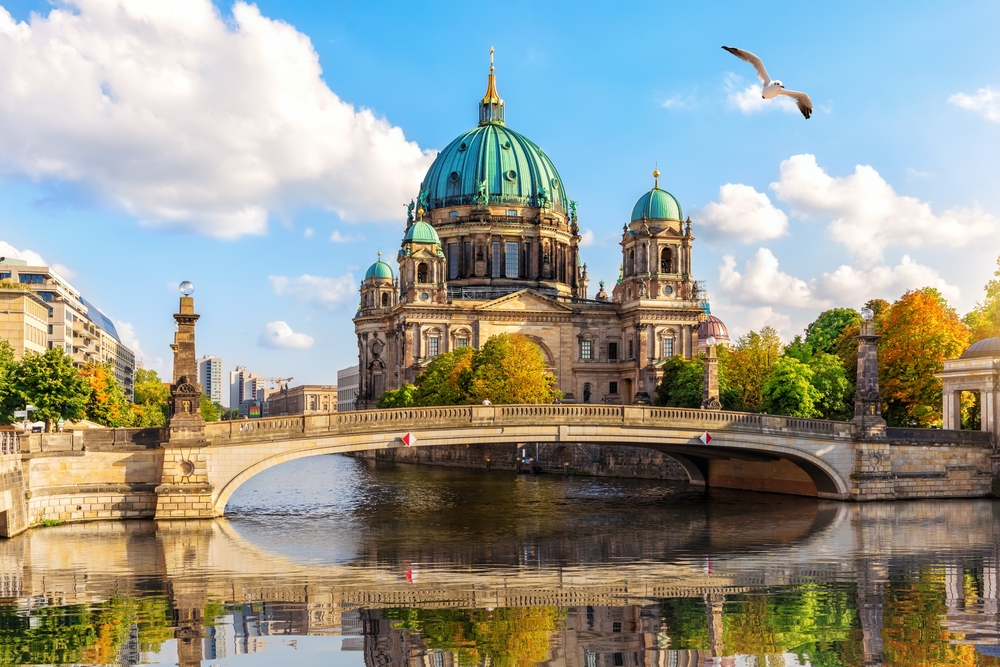
 Attractive cathedral or Berliner Dom on Museum Island beautiful summer view, Berlin, Germany
Berlin’s travel industry is set for significant transformations in 2025, influenced by visitor preferences, air capacity expansion, and emerging tourism drivers. A collaborative study by The Data Appeal Company and Mabrian, both part of Almawave Group, sheds light on the main trends defining the future of tourism in Germany’s capital.
Air capacity growth and market trends
According to insights from Mabrian, Berlin’s strong appeal to domestic travelers is evident, with air capacity* increasing by +11.7% compared to the first half of 2024. Medium and short-haul markets such as Austria, Switzerland, Spain, Italy, France, Turkey, the Netherlands, and the UK also play a crucial role in Berlin’s air network.
Carlos Cendra, Partner & Director of Marketing and Communications at Mabrian, states: “Looking ahead, air connectivity is expected to grow by +3.8% over the next six months, driven by an +11.5% increase in seat availability on traditional airlines. While low-cost carrier seat availability slightly declines, the segment still represents 59.2% of total air seats to Berlin.”
Among Berlin’s top 10 air markets, connectivity with Spain (+4.1%), Turkey (+15.3%), France (+5.9%), and Switzerland (+15.5%) is projected to grow between February and July 2025. New routes will also boost accessibility: in May, Air Transat will introduce a Toronto-Berlin connection, while Condor, Ryanair, Flynas, and Royal Jordanian will launch routes to destinations such as Dubai, Jeddah, and Amman.
Visitor sentiment & experience preferences
An analysis of two million digital footprints over the past year by The Data Appeal Company reveals key insights into visitor sentiment and experience preferences. Domestic travelers generate the highest volume of digital content about Berlin (45%), followed by Italians (5%), British (4.5%), and Polish (4.5%). Emerging markets include Dutch, Swiss, and Turkish visitors.
British and Polish travelers report the highest satisfaction levels (84/100), particularly in hospitality and food experiences. Visitor behaviors vary: Polish tourists prefer family-friendly attractions like DeJa Vu Museum but rate nightlife poorly (57/100). British visitors highlight landmarks like the Brandenburg Gate (88.5/100) and fine dining. Turkish travelers appreciate major attractions (95/100) but criticize local cuisine (79/100). Italians enjoy sightseeing and food but find entertainment below average (65/100).
Visitor’s profile
Hotels are the preferred accommodation choice for visitors to Berlin (81.8%), with an even higher preference among domestic travelers (85%), driven largely by business tourism. While international visitors are more likely to opt for short-term rentals, apartments, or alternative options such as B&Bs and hostels, hotels remain the dominant choice. In terms of travel groups, nearly a third of visitors (31.5%) travel as couples, while similar shares visit with family (26.2%) or alone (25.8%), the latter particularly influenced by business travel. The remaining 16.4% visit Berlin with friends.
What drives visitors to Berlin?
Mabrian’s data highlights cultural tourism as the dominant travel motivation (49%), showing a 2.3 percentage point increase from the previous year. While gastronomy and nature tourism remain key attractions, family-oriented and active tourism experiences are gaining traction.
Carlos Cendra adds: “Cultural tourism is the leading driver across all key markets, particularly for Turkish and Polish travelers (~65% of total motivations), while German and Swiss visitors show a more diverse range of interests. Travelers aged 35-44 years old represent the largest demand group, prioritizing cultural and gastronomic experiences.”
Top attractions & Visitor trends
According to Data Appeal’s analysis of the Sentiment expressed online by visitors, Berlin’s cultural landmarks continue to perform strongly in visitor sentiment and engagement.
Alexanderplatz remains the most reviewed attraction (12,000+ reviews, 85/100 sentiment score), while the Brandenburg Gate leads in sentiment (95/100), reinforcing its iconic status. The DeJa Vu Museum ranks among the top ten, reflecting growing interest in interactive experiences (+8% sentiment increase). Outdoor spots like Mauerpark and Tempelhofer Feld maintain strong scores (90+), though digital engagement with natural parks has slightly declined (-2.4% from 2023).
Döner Kebab remains the city's top food choice, while Syrian and Georgian cuisines gain popularity. However, sentiment for some traditional venues is dropping as Italian restaurants and international chains rise, possibly influenced by Turkish visitors, who are more critical of Berlin’s Kebab.
Business events driving tourism growth: ITB Berlin 2025
Business tourism plays a crucial role in Berlin’s economy, with major trade fairs ITB Berlin and Fruit Logistica driving peaks in hotel bookings and rates. The Charlottenburg-Wilmersdorf district, home to Messe Berlin, recorded some of the highest accommodation prices in 2024.
ITB Berlin, expected to welcome 113,000 attendees this year, is projected to generate over €16 million in tourism revenue, reinforcing Berlin’s position as a leading MICE (Meetings, Incentives, Conferences, and Exhibitions) destination.
Mirko Lalli, CEO of The Data Appeal Company, concludes: “Berlin is not just a cultural powerhouse. This analysis confirms that its appeal extends far beyond iconic landmarks. With thriving outdoor spaces, a dynamic food scene, and high-profile business events, Berlin remains a magnet for travelers. Understanding these evolving dynamics is crucial. With deep, data-driven insights, DMOs can craft sharper strategies, elevate visitor experiences, and position their destinations for sustainable growth.”




