Forecast 2026: The trends and trendsetters we'd like to see in global travel next year

Travel Daily Media

TDM AWARDS - NOMINATE NOW!

Forecast 2026: The trends and trendsetters we’d like to see in global travel next year

Travel Daily Media goes three on three with out 2026 forecast: three potential trendsetters and three upcoming trends

With 2026 looming on the horizon, we've taken a look back at the year that's drawing to a close and looking towards what may come next.

For us who cover the fields of travel, tourism, hospitality, and aviation, that means keeping an eye out for both upcoming trends and individuals who are bound to set the world on fire with fresh ideas that will shake up conventional thinking, ushering in better ways of showing travellers the world around them.

In this particular feature, we present three individuals with the potential to drive the industry's evolution, along with three trends we see taking centre stage in the year to come.

Three faces to watch in 2026

Beatrice Leong (right) prepares to lead her masterclass on inclusive events at BE @ Penang 2025

Malaysia: Beatrice Leong, gender and accessibility advocate

We had both the honour and the privilege of meeting Beatrice Leong at the recently concluded BE @ Penang 2025 in Malaysia where she made a strong case for accessibility in travel and tourism, particularly where MICE is concerned.

As an advocate for gender equality and accessibility for all, Leong famously said: "Activist is just a fancy word for people who like to scold governments."

In her case, though, scolding governments has yielded great results: Leong's intrepid drive and that of other accessibility advocates has gone a long way with regard to making travel and hospitality in Malaysia more inclusive.

She has not been afraid to ask the difficult questions and is quite upfront with suggestions on how spaces can be made more accessible for those who perceive or experience the world differently from others, not only on a physical level, but on a neuro-psychological level, as well.

With regard to living design, in particular, she asked of her audience: "Accessibility is actually about how usable is your space, how usable is your product, your service design. How kind are you in dealing with people who have anxiety, who are probably facing depression, but still need to go out to buy groceries? These things require clarity of information. How are you conveying the architecture of information?"

Leong believes that, while full accessibility for all might not really be possible, humans need accessibility all the time; that, in turn needs adjustment on the part of hospitality providers, airlines, and facility managers, along with a greater understanding and patience with travellers who see or experience the world differently from everyone else.

Hers is a voice we look forward to hearing, especially given the increasing emphasis on accessibility the world over.

Miguel Cabel Moreno dishes up helpings of his Amor del Mar seafood speciality at a four-hands dinner at Crimson Boracay

Philippines: Miguel Cabel Moreno, Michelin-lauded chef and culinary heritage advocate

In a recent interview held in the wake of From Shore to South, a four-hands dinner collaboration at Crimson Resort and Spa Boracay, Filipino chef and culinary advocate Miguel Cabel Moreno told us about the woman who approached him just minutes after he received two Michelin Bib Gourmand nods for his restaurants Palm Grill and Cabel.

As Cabel Moreno recalls: "She went and told me 'I would actually prefer to receive your award than a Michelin Star.' When I asked her why, she explained that it was an award given by the people rather than the critics."

To say that Cabel Moreno's food is a love letter to the people who love to eat would be seriously underplaying the importance of his work to the people of Southern Mindanao, a region that has been bypassed all too frequently by Philippine tourism officials who prefer to tout the colonial treasures of Luzon and the Visayas.

Indeed, promoting the cuisine and heritage of such a far-flung and criminally underrated (and, indeed, oft maligned) destination has been an uphill climb for the chef.

As he put it: "I used to tell potential diners: 'Look, Mindanao food is Filipino food. It's as good as the usual Filipino flair that you enjoy; just give it a try.' So, that has been a constant struggle. Despite our meager marketing efforts, presence, and all that, I'm grateful that we were able to stay. And the coming of the Michelin Guide validated all that hard work for us; it helped pave the way for my restaurants. Speaking on my restaurant's behalf, it opened so many doors for Filipinos to finally get to try it because an entity as huge as Michelin Guide validated and recognized us for what we do. Because of that, it opened people's eyes, and now they want to try it."

As of press time, Cabel Moreno is poised to open a new branch for Palm Grill at Tambayan, the new food hall at Ninoy Aquino International Airport's Terminal 3.

Likewise, his children's books Migoy: The Tausug Boy and The Tale of Putli Mandi, written in English, Filipino, and the chef's native dialect Bahasa Sug, have gone a long way in presenting the culture of Southern Mindanao to youngsters of the northern and central parts of the country, as well as the rest of the world as these were featured at the 2025 Frankfurt Book Fair.
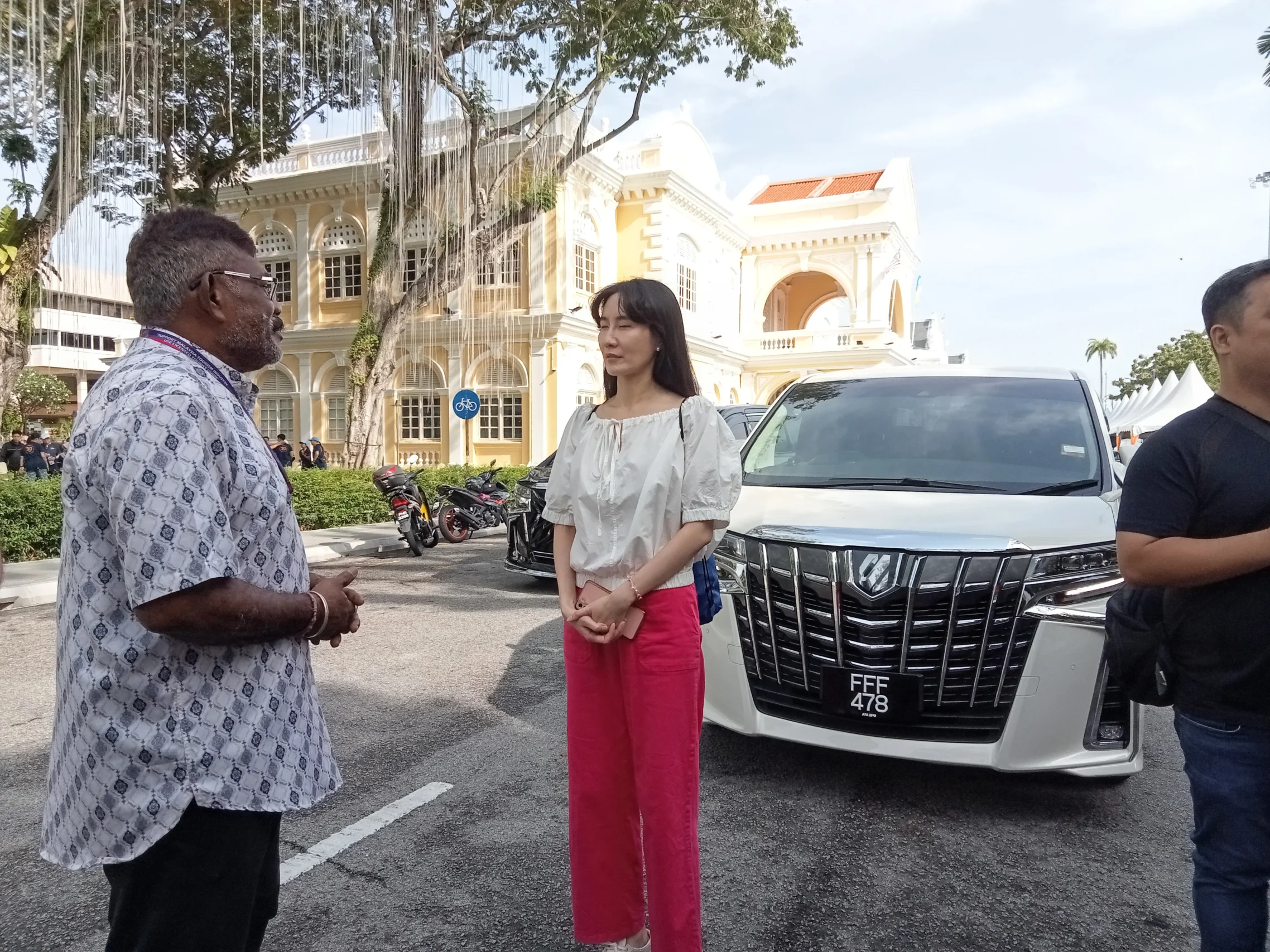
Dr Bona Nahyun Lee (centre) listens as a guide explains the history of Penang's George Town district

South Korea: Dr Bona Nahyun Lee, best-selling author and tech evangelist

The beauty of contemporary technology lies in the way it makes things easier for people, regardless of what industry they may belong to.

Such is the case with the MICE sector, a field whose professionals too often end up burnt out as they need to deal with the tedium of planning and coordination well before the actual event goes live.

But for BornTiger chief executive and tech evangelist Dr Bona Nahyun Lee, contemporary technologies go a long way towards making things easier and more efficient for events professionals.

During her talk The AI-powered Future of Business Events, Lee pointed out the growing variety of tools available for handling everything from planning to actual showrunning.

Artificial intelligence (AI), in particular, takes much of the stress out of the equation, seeing how it enables professionals to create whole presentations with just a few keywords, prepare actual event sequences, and even simulate venues in use to give all stakeholders a comprehensive preview of their endeavour, enabling them to make the necessary adjustments well beforehand.

At present, most of Lee's books are in Korean, but we look forward to the day when her wisdom on innovation and automation makes it to a wider global audience.

Three trends to keep an eye on in 2026

Regenerative and rehabilitative tourism beyond Asia

One of the major talks during the 2025 PATA Destination Marketing Forum in Thailand was a presentation on Doi Tung, a sustainable destination in the north of the country which was, alas, a hotbed for criminal activity in the notorious heyday of the Golden Triangle.

Decades on, however, Doi Tung has more than cleaned up its act, as it now serves as a cultural hub that offers some of the best coffee, tea, and even macadamia nuts on the continent.

That being said, Doi Tung's story should serve as an example and inspiration to other nations when it comes to transforming areas with a less than desirable reputation into places that offer lessons from their history along with specialities endemic to the region.

In doing so, governments can support communities through what is known as regenerative tourism and essentially bring hope to areas with a dark past and offer a way towards a brighter future.

We have seen such transformations in battle-torn areas like many parts of Japan, as well as the Philippine islands of Bataan and Corregidor; after all, anyone who fails to hear the tales of the past or heed their lessons is bound to make the same tragic mistakes.

Immersive learning experiences for the next generation of travel and tourism professionals

MICE isn't just a way by which industries can gather their best and brightest under a single roof, but these events also serve as a learning experience for the next generation of professionals.

We saw this first-hand at BE @ Penang and at PDMF2025 when whole contingents of students and their mentors made their way over to listen to the industry's foremost minds to gain greater knowledge.

Having been an academic myself, I cannot state enough on how exposure to actual industry professionals and experiences helps round out an individual's education: they get to see life in the real world, see the current pros at work, and gain a greater understanding of the careers they face when schooldays end.

Also, I've come to the conclusion that the ideas offered by students however shyly do have a great deal of merit: it takes someone who has not yet been jaded by the rigours and stresses of the profession to come up with fresh ideas or new ways to approach old issues, bringing these closer to resolution.

Time to rethink MICE

MICE has evolved significantly throughout this year, and the inclusion of dedicated Experience Zones at events like ITB Asia have opened the eyes of many event organisers to various possibilities.

With technology changing at such a rapid clip, particularly interactive programming, MICE professionals need to sit down and consider where they may best intrgrate these innovations in their events.

Indeed, rather than just hopping from one booth or pavilion to another whilst pressing flesh or gathering brochures, interactive technologies help participants get a greater understanding of the event or of recent innovations, thus encouraging them to delve deeper and learn more.

Likewise, thanks to the introduction of hybrid events, nascent and current technologies make it possible for those overseas to get in on the action without needing to actually be on site.

While this may seem awkward, it does give the illusion of actually being there without building an environmentally unsound carbon footprint, thus also earning points for sustainability.

We've much to think about for the coming year, but one thing is certain: with travel and tourism evolving so rapidly, the best thing we can do is sit back, relax, and just be there for the ride into parts unknown.


Join The Community

Join The Community

TDM

x Studio

Connect with your clients by working with our in-house brand studio, using our expertise and media reach to help you create and craft your message in video and podcast, native content and whitepapers, webinars and event formats.

Forecast 2026: The trends and trendsetters we’d like to see in global travel next year

Travel Daily Media goes three on three with out 2026 forecast: three potential trendsetters and three upcoming trends

With 2026 looming on the horizon, we've taken a look back at the year that's drawing to a close and looking towards what may come next.

For us who cover the fields of travel, tourism, hospitality, and aviation, that means keeping an eye out for both upcoming trends and individuals who are bound to set the world on fire with fresh ideas that will shake up conventional thinking, ushering in better ways of showing travellers the world around them.

In this particular feature, we present three individuals with the potential to drive the industry's evolution, along with three trends we see taking centre stage in the year to come.

Three faces to watch in 2026

Beatrice Leong (right) prepares to lead her masterclass on inclusive events at BE @ Penang 2025

Malaysia: Beatrice Leong, gender and accessibility advocate

We had both the honour and the privilege of meeting Beatrice Leong at the recently concluded BE @ Penang 2025 in Malaysia where she made a strong case for accessibility in travel and tourism, particularly where MICE is concerned.

As an advocate for gender equality and accessibility for all, Leong famously said: "Activist is just a fancy word for people who like to scold governments."

In her case, though, scolding governments has yielded great results: Leong's intrepid drive and that of other accessibility advocates has gone a long way with regard to making travel and hospitality in Malaysia more inclusive.

She has not been afraid to ask the difficult questions and is quite upfront with suggestions on how spaces can be made more accessible for those who perceive or experience the world differently from others, not only on a physical level, but on a neuro-psychological level, as well.

With regard to living design, in particular, she asked of her audience: "Accessibility is actually about how usable is your space, how usable is your product, your service design. How kind are you in dealing with people who have anxiety, who are probably facing depression, but still need to go out to buy groceries? These things require clarity of information. How are you conveying the architecture of information?"

Leong believes that, while full accessibility for all might not really be possible, humans need accessibility all the time; that, in turn needs adjustment on the part of hospitality providers, airlines, and facility managers, along with a greater understanding and patience with travellers who see or experience the world differently from everyone else.

Hers is a voice we look forward to hearing, especially given the increasing emphasis on accessibility the world over.

Miguel Cabel Moreno dishes up helpings of his Amor del Mar seafood speciality at a four-hands dinner at Crimson Boracay

Philippines: Miguel Cabel Moreno, Michelin-lauded chef and culinary heritage advocate

In a recent interview held in the wake of From Shore to South, a four-hands dinner collaboration at Crimson Resort and Spa Boracay, Filipino chef and culinary advocate Miguel Cabel Moreno told us about the woman who approached him just minutes after he received two Michelin Bib Gourmand nods for his restaurants Palm Grill and Cabel.

As Cabel Moreno recalls: "She went and told me 'I would actually prefer to receive your award than a Michelin Star.' When I asked her why, she explained that it was an award given by the people rather than the critics."

To say that Cabel Moreno's food is a love letter to the people who love to eat would be seriously underplaying the importance of his work to the people of Southern Mindanao, a region that has been bypassed all too frequently by Philippine tourism officials who prefer to tout the colonial treasures of Luzon and the Visayas.

Indeed, promoting the cuisine and heritage of such a far-flung and criminally underrated (and, indeed, oft maligned) destination has been an uphill climb for the chef.

As he put it: "I used to tell potential diners: 'Look, Mindanao food is Filipino food. It's as good as the usual Filipino flair that you enjoy; just give it a try.' So, that has been a constant struggle. Despite our meager marketing efforts, presence, and all that, I'm grateful that we were able to stay. And the coming of the Michelin Guide validated all that hard work for us; it helped pave the way for my restaurants. Speaking on my restaurant's behalf, it opened so many doors for Filipinos to finally get to try it because an entity as huge as Michelin Guide validated and recognized us for what we do. Because of that, it opened people's eyes, and now they want to try it."

As of press time, Cabel Moreno is poised to open a new branch for Palm Grill at Tambayan, the new food hall at Ninoy Aquino International Airport's Terminal 3.

Likewise, his children's books Migoy: The Tausug Boy and The Tale of Putli Mandi, written in English, Filipino, and the chef's native dialect Bahasa Sug, have gone a long way in presenting the culture of Southern Mindanao to youngsters of the northern and central parts of the country, as well as the rest of the world as these were featured at the 2025 Frankfurt Book Fair.

Dr Bona Nahyun Lee (centre) listens as a guide explains the history of Penang's George Town district

South Korea: Dr Bona Nahyun Lee, best-selling author and tech evangelist

The beauty of contemporary technology lies in the way it makes things easier for people, regardless of what industry they may belong to.

Such is the case with the MICE sector, a field whose professionals too often end up burnt out as they need to deal with the tedium of planning and coordination well before the actual event goes live.

But for BornTiger chief executive and tech evangelist Dr Bona Nahyun Lee, contemporary technologies go a long way towards making things easier and more efficient for events professionals.

During her talk The AI-powered Future of Business Events, Lee pointed out the growing variety of tools available for handling everything from planning to actual showrunning.

Artificial intelligence (AI), in particular, takes much of the stress out of the equation, seeing how it enables professionals to create whole presentations with just a few keywords, prepare actual event sequences, and even simulate venues in use to give all stakeholders a comprehensive preview of their endeavour, enabling them to make the necessary adjustments well beforehand.

At present, most of Lee's books are in Korean, but we look forward to the day when her wisdom on innovation and automation makes it to a wider global audience.

Three trends to keep an eye on in 2026

Regenerative and rehabilitative tourism beyond Asia

One of the major talks during the 2025 PATA Destination Marketing Forum in Thailand was a presentation on Doi Tung, a sustainable destination in the north of the country which was, alas, a hotbed for criminal activity in the notorious heyday of the Golden Triangle.

Decades on, however, Doi Tung has more than cleaned up its act, as it now serves as a cultural hub that offers some of the best coffee, tea, and even macadamia nuts on the continent.

That being said, Doi Tung's story should serve as an example and inspiration to other nations when it comes to transforming areas with a less than desirable reputation into places that offer lessons from their history along with specialities endemic to the region.

In doing so, governments can support communities through what is known as regenerative tourism and essentially bring hope to areas with a dark past and offer a way towards a brighter future.

We have seen such transformations in battle-torn areas like many parts of Japan, as well as the Philippine islands of Bataan and Corregidor; after all, anyone who fails to hear the tales of the past or heed their lessons is bound to make the same tragic mistakes.

Immersive learning experiences for the next generation of travel and tourism professionals

MICE isn't just a way by which industries can gather their best and brightest under a single roof, but these events also serve as a learning experience for the next generation of professionals.

We saw this first-hand at BE @ Penang and at PDMF2025 when whole contingents of students and their mentors made their way over to listen to the industry's foremost minds to gain greater knowledge.

Having been an academic myself, I cannot state enough on how exposure to actual industry professionals and experiences helps round out an individual's education: they get to see life in the real world, see the current pros at work, and gain a greater understanding of the careers they face when schooldays end.

Also, I've come to the conclusion that the ideas offered by students however shyly do have a great deal of merit: it takes someone who has not yet been jaded by the rigours and stresses of the profession to come up with fresh ideas or new ways to approach old issues, bringing these closer to resolution.

Time to rethink MICE

MICE has evolved significantly throughout this year, and the inclusion of dedicated Experience Zones at events like ITB Asia have opened the eyes of many event organisers to various possibilities.

With technology changing at such a rapid clip, particularly interactive programming, MICE professionals need to sit down and consider where they may best intrgrate these innovations in their events.

Indeed, rather than just hopping from one booth or pavilion to another whilst pressing flesh or gathering brochures, interactive technologies help participants get a greater understanding of the event or of recent innovations, thus encouraging them to delve deeper and learn more.

Likewise, thanks to the introduction of hybrid events, nascent and current technologies make it possible for those overseas to get in on the action without needing to actually be on site.

While this may seem awkward, it does give the illusion of actually being there without building an environmentally unsound carbon footprint, thus also earning points for sustainability.

We've much to think about for the coming year, but one thing is certain: with travel and tourism evolving so rapidly, the best thing we can do is sit back, relax, and just be there for the ride into parts unknown.


Join The Community

Stay Connected

Facebook

101K

Twitter

3.9K

Instagram

1.7K

LinkedIn

19.9K

YouTube

0.2K

TDM

x Studio

Connect with your clients by working with our in-house brand studio, using our expertise and media reach to help you create and craft your message in video and podcast, native content and whitepapers, webinars and event formats.

Scroll to Top