


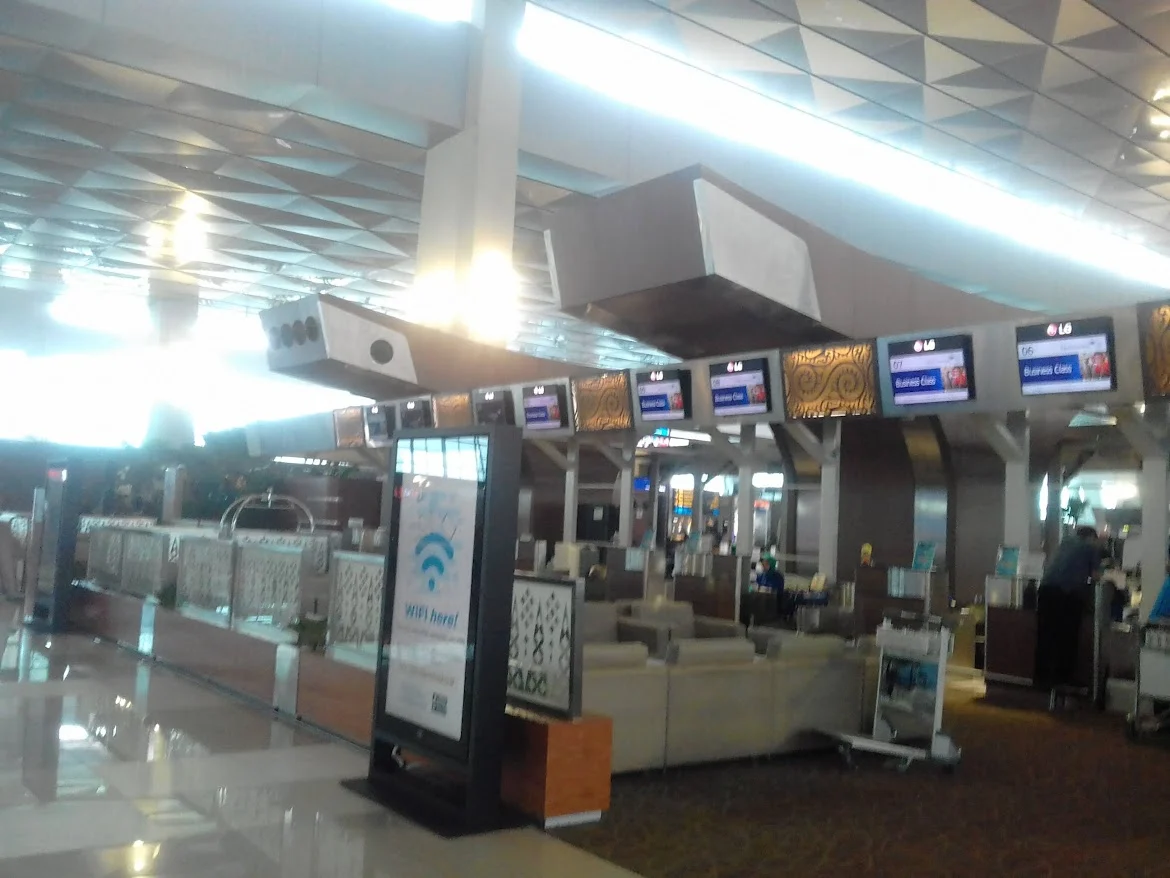
Personally, I think that airports give travellers their first and last impressions of the country they're visiting and, as such, need to make a solid (and certainly good) impression at that.
However, through various journeys over the years and throughout my coverage of the aviation and airport beats over the past two years, I can't help but think that contemporary airports need a general overhaul not only in terms of aesthetics, but also operational capability and capacity.
Especially after the world reopened following the COVID-19 pandemic, airports have found themselves overrun and overwhelmed by the massive numbers of travellers flying in or out of them, the crowds spurred on by the notion of revenge travel after being grounded for nearly three years.
But the reopening of global borders has done more than just overwhelm airports: it has also revealed numerous issues that need to be addressed if these are to continue operating in a manner that makes travel more comfortable, convenient, and efficient for all concerned stakeholders.
In today's post, we look into these issues and consider several potential solutions with which to alleviate them.

Key issues affecting today's airports
For the most part, congestion is one of the biggest issues plaguing contemporary airports: the massive influx of travellers in the post-pandemic era tends to lead to long queues to various processes which, in principle, ought to take but five to ten minutes of a traveller's time.
Indeed, even if one comes in within the three-hour zone for international flights or the two-hour one for domestic, needing to stand in line for prolonged periods of time at check-in, immigration, and security could lead to a mad rush before the boarding gate closes.
Some airports have tried to mitigate the situation through the implementation of technologies that are meant to speed up key processes, as in the case of the contactless biometric / machine-driven immigration systems now in place at Singapore's Changi Airport, but these are more of the exception than the rule, especially in much of the developing world.
Accessibility, especially in the context of the differently-abled, the eklerly, and those travelling with children under the age of five, is another issue: in several airports within Southeast Asia, there is a dearth of both services and amenities to ensure that they can travel safely and comfortably.
We have seen this in the way some airports' moving ramps / travellators are not functional and remain under "preventive maintenance" for months on end, in the way whole arrival corridors are filled with rows of wheelchairs but none are offered to travellers who are obviously having trouble walking, and, in some extreme cases, staff seem ill-equipped to handle the needs of those in physical or even psychological difficulty.
But the matter of staff also opens up another issue: manpower shortage, seeing how many airport staff who were either made redundant or who lay fallow throughout the pandemic years have opted not to return to airport services.
Replacing human actors in airport operations with technology may seem like the best solution to that particular issue, but it also raises dangers related to cybersecurity and technical difficulties; if you recall the global airport glitch that delayed flights for up to 48 hours the world over in January 0f this year, what assurance can airports give the public that it won't happen again?
Admittedly, many of the world's airports are undergoing some extensive renovations as of press time, but we have to ask: is what they're doing enough and, more importantly, is it the right solution for the issues at hand?

A few points to ponder
As 2025 draws to a close and the holiday rush to hometowns and homelands precipitates an exodus that threatens to overwhelm airports yet again,
In which case, perhaps airports can take a cue from the following ideas we came up with following our own year of travels throughout the globe:
Accessibility not artefacts
One trend we have observed in airports, particularly in Southeast Asia, is the way arrival corridors are being presented as cultural showcases as opposed to mere passageways between the plane and immigration.
Several airports have museum-quality displays presenting key aspects of the country's history, art, and culture, but these rarely ever get noticed, especially by travellers trying to get back on their feet after a long-haul flight, those who flew in on the red-eye from their point of origin, and those who are in physical difficulty.
Rather than offer galleries, accessibility needs to be an airport's primary concern, and that means working travellators, shortened distances between the gate and immigration, ample trained staff deployed at gates, as well as a variety of mobility solutions to aid the weary and footsore.
The bathroom situation and overall comfort
Aside from mobility solutions, airports also need to rethink their personal sanitation facilities, particularly in terms of the number of available bathrooms and the way these are spaced within the facility.
Also, given how some people need time to collect themselves prior to or following a flight, quiet rooms in which to help them recentre and calm down are also necessary; indeed, many airports could take a cue from The Butterfly Effect initiative offered at the Kuala Lumpur International Airport.
Given the growing number of silver travellers, perhaps airport management experts also need to look into providing spaces for their care, particularly for those of a more significantly advanced age.
Now, what about technology?
Given the fracas at global airports at the start of the year when navigational glitches led to most post-holiday travellers fretting for hours at their airports of origin, it is imperative that those in management review their facilities' technological capabilities.
For developers, this also means doing more eztensive quality control procedures to ensure that such incidents no longer happen on such a massive scale.
Cybersecurity also needs to be taken into serious consideration, especially given the increasing number of online attacks in recent months; constant vigiliance is key, along with regular updates to ensure ironclad systems that are not vulnerable to external overrides.
We also advocate for the more widespread use of biometrics, but also ask those with systems already in place to recalibrate their systems as not all appear to be working properly.
Training and courtesy matter
Over the past two years, we have noticed that people in different airports in different countries certainly reflect the ethics and values of their location...and, unfortunately, it doesn't really leave a good impression as some airport personnel can be surly, even rude, to foreign guests.
We may chalk that up to a language barrier, but we also see that as a lapse in training, particularly guest handling / customer service, and this is particularly damning as working in an airport is, essentially, a service position.
Airport management can consider customer service training on the regular for all staff, not just those who interact with people all the time; language training is also a key component as better communication can significantly decrease the friction often encountered between travellers and local personnel.
With 2026 looking like another great year for global travel in terms of air passenger numbers, airports really ought to rethink and recalibrate, see where they can alter and improve, to ensure that travellers' first and last impressions of their country are good ones.




