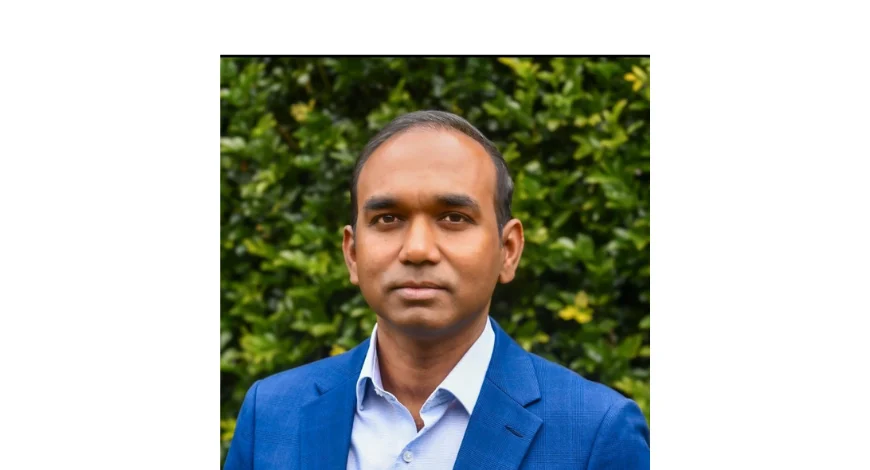
Technology may be ubiquitous in today's travel and hospitality sectors, but Arrowood International founder and CEO Adrian Praveen opines that a human touch will always be at the heart of global hospitality.
Praveen pointed this out during his talk on The Future of Hospitality on Friday, 12th December, on Day 2 of BE @ Penang 2025.
While tools using artificial intelligence (AI) and other ways of automating systems on the back-end of operations have been gaining acceptance throughout the industry, he opined that hospitality is essentially nothing without the human touch.
As he put it: "For hotels to stand out in the future, To stand out in future for hotels, it's not just about the architecture, interior design, or furniture. The most important thing is the emotional connection which is the feeling of being welcomed, respected, and safe that can only be conveyed from one human being to another."

Lessons from history
Indeed, the very history of the global hospitality sector shows that the industry is nothing without its distinctive human touch.
The earliest record of paid accommodations dates back 4,000 years when enterprising individuals in Mesopotamia offered those travelling arduous desert routes a safe and comfortable place to stay through the night, along with meals for both men and beasts.
With the establishment of religious orders in the early centuries of the Christian Era, rules and regulations for the management of accommodations and the treatment of guests were codified, particularly in Europe where the monastic founder Benedict of Nursia established a code wherein all travellers were to be received with honour, grace, and dignity.
While the centuries have passed and innovations have punctuated the history of contemporary hospitality, Praveen pointed out that up to 70 percent of adverse comments on hotels and other forms of lodging stem from the way guests are treated by staff and that human interaction between staff and guests remains the biggest draw for customer loyalty.
After all, what would be the purpose of earning loyalty points from an establishment where one does not feel welcome, let alone safe or comfortable, because the staff tends to be either cold or uncaring about their welfare?
Praveen likewise pointed out that a warm welcome will always be the first and most vivid memory any guest would have of their hotel.
He explained: "Every single person, 4,000 years ago and 4,000 years later, wanted to feel welcome. The feeling of ' belong here, I'm not an interruption, and you're happy that I came.' That's something that hasn't changed. The second thing that hasn't changed is called respect. Guests that come want to feel welcome and respected. Feeling respected means feeling valued, acknowledged, and treated with dignity. So when a guest feels respected, it means 'You see me' to them."

Three Fs for success
While an F on an academic report card normally means failure, Praveen uses the letter to denote the three key factors that would drive the humanistic side of a hotel's success moving forward.
These are as follows:
Flawlessness: While not necessarily absolute perfection, flawlessness in this case is getting the details of the individual customer and their stay right. From getting their name right in registration and whenever they are addressed, to knowing cultural or dietary sensitivities, to their preferences in terms of activities and even spa treatments, guests appreciate when hotels get things right. It makes them feel not only welcomed, but special and valued regardless of whether they're there on a vacation or a business trip;
Fast: Especially in these days when instant gratification appears to be the norm, good service delivered quickly is becoming one of the factors that influence a guest when it comes to rebooking a property in the future. This is where technology comes in as more help than hindrance: automation, particularly AI-driven automation, drastically reduces the time in which a guest's check-in or check-out process, giving them more time to explore and enjoy and property; and, most importantly
Friendly: Even in these days when most people affect a stern, even cold, demeanour to look cool and competent, nothing will ever replace the value of a warm smile or a caring gesture. From sincerely respectful greetings at the front desk, to cheerful assistance on an airport transfer, to even a simple greeting and a grin whilst welcoming a guest into a restaurant or leisure area on the property, friendliness and cordiality remain the biggest factors for making a hotel memorable.
But how exactly can hotels bring these Fs to the fore to create meaningful experiences for their guests?
Praveen emphatically pointed out that it's all about training.
As he explains: "Hotels and hoteliers spend about 28 to 30 hours a year in training. By training, it's not those online tests that you do; the ones where you get asked, 'What do you do when a guest wants to check in?' Click this, click this. No, that's not training. Training is where you get professionals to come in to coach, motivate, and teach you skills that you put in hotel experience.
"[Especially when it comes to greeting people,] you have to reteach that and the reason why we all say different things is because we all come from different backgrounds, different cultures, different training backgrounds, different hotels doing different practises. Because of that, if you don't set things right, you will see a lot of defects and flawlessness will not happen. So, be sure to reinforce the right standards."