

Search Results forChina United Airlines

China travel slowdown weighs on Japan as Chinese spending and arrivals slide
The decline in Chinese travel and spending to Japan is beginning to weigh on the Japanese market. Against the backdrop of a travel caution advisory for Japan issued by the Chinese government, China’s three major airlines—Air China, China Eastern Airlines and China Southern Airlines—along with several others including Shandong Airlines, Xiamen Airlines and Shanghai Airlines, on the 26 again issued notices on special ticket handling for Japan-related routes. For tickets that meet the applicable conditions, free refund and rebooking policies have been extended until October 24 this year. More recently released data from Japanese industry associations have provided a clearer picture of the situation. The Japan Department Stores Association (Chuo Ward, Tokyo) said on January 23 that in December 2025, both the number of Chinese customers and sales to Chinese shoppers at department stores nationwide fell by 40% year on year. Data released the same day showed that total nationwide department store sales in December 2025 (on a same-store basis) declined 1.1% year on year to JPY 654.2 billion, marking the first drop in four months. The number of tax-free shoppers fell 16.7% to 500,000, while tax-free sales decreased 17.1% to JPY 51.9 billion(about USD 340 million). Sales to domestic Japanese customers rose 0.6%. According to statistics from the Japan National Tourism Organization (JNTO), the number of Chinese visitors to Japan in December 2025 totaled 330,400, down 45.3% year on year. The Osaka Convention & Tourism Bureau said on January 26 that the number of mainland Chinese visitors to Osaka Prefecture in December 2025 fell 45% year on year to an estimated 176,000. As Chinese visitors—previously a key driver of inbound growth—are expected to continue declining, attracting travelers from Europe, the United States and other regions is becoming increasingly important. Statistics from Kansai Airports show that the number of China-related flight movements at Kansai International Airport in December 2025 declined 40% year on year. Demand dropped particularly sharply on routes from regional Chinese cities, which typically carry a higher share of group travelers. Given Kansai’s geographic proximity to China, mainland Chinese visitors have historically accounted for a higher share of foreign tourists than in the Tokyo metropolitan area. During the 2010s, mainland Chinese group tours—often associated with large-scale shopping sprees—formed the core of inbound tourism to Osaka. However, following the COVID-19 pandemic, the recovery of mainland Chinese visitors has lagged, while inbound demand has become more diversified, with more travelers from South Korea, Southeast Asia, Europe and the United States. According to the Japan Tourism Agency’s accommodation travel statistics, mainland Chinese travelers accounted for 25.3% of all foreign overnight stays in Osaka Prefecture in October 2025, down 16.2 percentage points from October 2019. While the share remains higher than Tokyo’s 14.8%, Osaka’s reliance on mainland Chinese visitors has clearly shifted. Read Chinese version

Philippines seeks more arrivals from North America, China, India, & MidEast
The Philippine Department of Tourism (DOT) plans to expand its promotions budget for several key and emerging markets in 2026, including the United States, South Korea, Canada, China, India and the Middle East. Tourism secretary Christina Frasco said the DOT intends to fully recover the South Korean market, which slipped to 1.34 million last year from 1.45 million in 2024. She added that the DOT will also capitalise on the US as one of the country’s most reliable markets to pull the arrival numbers for 2026. With regard to Canada, the DOT is optimistic that the new connections through Air Canada would bring in more Canadian tourists into the country. 2025 in a nutshell The Philippines recorded 6.4 million foreign visitors and returning overseas Filipinos in 2025, generating an estimated PHP694 billion in tourism receipts. Of this number, South Korea remains the top market, followed by the US with 1.32 million visitors, Japan with 469,521, Australia with 359,646, and Canada with 333,136. China ranked sixth with 237,101 while India ranked 11th with 104,994 visitors from January to December 2025. Into the east Looking ahead, the DOT will also ramp up promotional activity in China as the Philippines eases its visa policy for Chinese nationals, allowing them visa-entry of up to 14 days in the country. Frasco remarked: “China has been challenging, to say the least. So, for China specifically, we’re working with our Beijing and Shanghai offices plus the private sector. We will have a very specific targeted campaign in certain cities even as we work with the airlines to recover the pre-pandemic flights.” It was noted that inbound flights to the Philippines from China are only up to 50 percent of their pre-pandemic totals, so the new visa policy stands to be of good help. Likewise, the Philippines sees promising growth from the Middle East, particularly from the United Arab Emirates market whose leisure travelers coming into the country have increased significantly over the past year. UAE flag carrier Emirates is also requesting increased slots from the UAE to Manila as well as the retention or expansion of their Cebu and Clark flights.

Regional travel costs climb as airlines bypass Venezuelan airspace amid diplomatic rift
Latin America found itself in for a rude awakening before dawn on Saturday, 3rd January, as US military operatives in Venezuela infiltrated the home of Venezuelan President Nicolás Maduro, dragging the head of government and his wife into custody following an ouster that dragged on for months. Matters have not been helped by US President Donald Trump’s strident statement in the hours following the Maduros’ capture that the United States would run Venezuela, offering no further details as to how this would ensue but chilling the world with his declaration that he would not hesitate to put boots on the ground. While this may seem like an issue strictly confined to the Americas, experts feel that it will have repercussions on a global scale, particularly when it comes to the economy, diplomatic relations, and certainly travel and tourism. Travel Daily Media takes a look at the situation from the point of view of the travel sector and, in this piece, aims to point out the potential repercussions for travellers the world over. The current situation The Florida arm of US broadcasting network NBC reported in the early hours of Sunday, 4th January, that the Venezuela offensive significantly hampered travel, particularly for American tourists making their way home after the Christmas and New Year holidays. Flight cancellations were noted throughout the Caribbean, as well as Central America, given how flights to and from Aruba, Puerto Rico, and the US Virgin Islands were grounded, along with those making their way to the Lesser Antilles Islands north of Venezuela. A report from Cruise Critic dated Monday, 5th January, declared that over 48,000 passengers were stranded in Puerto Rico following the US Federal Aviation Administration (FAA)’s stand-down order for all airlines within the region. Despite airlines waiving change fees for passengers who had to rebook their flights and US transportation secretary Sean Duffy’s assurance that things would be back to normal by Sunday morning, many travellers were still unable to return to the US on schedule. What will this mean for the rest of the world? With regard to the repercussions the US invasion of Venezuela will have on travel and tourism moving forward, we first need to consider the immediate effect it has on tourism within the regional level. A report published on 5th January by global business intelligence provider iPMI Global titled Geopolitical Tensions and the Disruption of LATAM and Caribbean Global Mobility and Tourism Markets opens with the following statement: “The geopolitical situation involving the Trump administration and Venezuela, particularly recent US military actions, has triggered a significant crisis for tourism in Venezuela and created substantial knock-on effects across the wider Caribbean and northern South America. The primary impacts are twofold: immediate, acute operational disruptions and a more persistent, damaging shift in traveller perception and safety concerns.” For Latin and North America, the immediate repercussions were obviously the protracted departure delays for both flights and cruises, not to mention hampered operations with regard to land transportations. It is sobering to think, however, that we may be looking at the following occurrences in the wake of the invasion over the next several weeks and even months: Travel and tourism safety in the region has been significantly compromised As in any region hit by geopolitical conflict, Latin America and the Caribbean will be perceived elsewhere in the globe as a highly unstable area, thus not recommended for leisure travellers. Likewise, Venezuela will find itself on a list of nations considered verboten due to political or economic instability, widespread criminality, and precarious safety; Numerous routes have now been deemed unstable or unreliable Another thing to consider is that much of the international travel done in Latin America is done by land. The current situation in Venezuela will mean a significant changing of routes throughout the region, as travellers, regardless of whether they’re out for business or leisure, will opt for safer, more secure routes offering minimal inconvenience and a lower chance for harassment at borders; Tourism-reliant economies are placed in a precarious position The cruise industry has long been aware that tourism is the lifeblood for many smaller economies within the Caribbean and Latin America. Some experts feel that cruise tourism within the region will err more on the side of caution for several months following the invasion as both cruise lines and travellers will seek safer waters and destinations. This will lead to lower earnings for several nations within the region, potentially fuelling an economic crisis; and The situation may turn out to be a precedent for similar situations elsewhere Now this is where things get dangerously interesting. The US’ application of pressure on the Venezuelan government has disturbing parallels in the way China has been hounding Taiwan and the Philippines by conducting military exercises in sovereign waters, the ongoing Israeli-Palestinian conflict over Gaza, and, on an extreme level, the Russian annexation of Ukraine. While the first example has not yet had the level of impact as the Venezuelan crisis or even the latter two examples, the conflict between China and its regional neighbours has driven everyone from travel agents to individual travellers to tread carefully when moving between those three nations. It's isn't over yet... iPMI Global analyst Christopher Knight pointed out that this is an evolving situation and that anyone travelling in or out of the region must take the necessary precautions. According to Knight: "The Trump–Venezuela situation is significantly suppressing tourism in Venezuela itself and creating knock-on effects for travel in the broader Caribbean and northern South America, largely through safety perceptions, airspace disruption and travel advisories. While mainstream Caribbean and South American destinations remain open, tourists should plan cautiously, expect potential flight disruption, and stay updated on advisories as the situation evolves." It is to be hoped that a diplomatic resolution to these conflicts may be found soon; otherwise, it becomes a game wherein nobody wins and everyone loses.
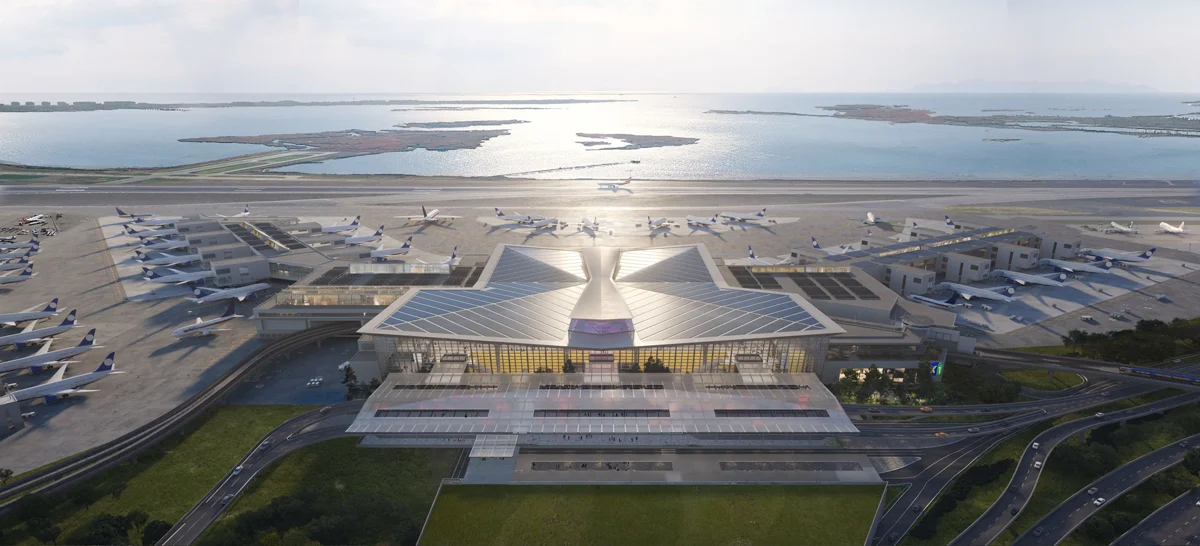
China Eastern Airlines is the latest partner for the New Terminal One at JFK International Airport
The New Terminal One at New York John F. Kennedy International Airport (JFK) announced a new strategic partnership with China Eastern Airlines on Wednesday, 22nd October. China Eastern Airlines joins the rapidly growing community of international airlines that have selected the New Terminal One as their partner to deliver a world-class guest experience at JFK, the largest aviation gateway into the United States. Currently located at the existing Terminal 1, the airline will continue to offer nonstop service between Shanghai and New York from New Terminal One, providing travelers with seamless access to one of Asia's most important financial and cultural hubs. Jennifer Aument, CEO at The New Terminal One, declared: “We are honoured to serve as China Eastern Airlines' long-term strategic partner as they continue to grow in New York City. China Eastern's commitment to exceptional service aligns with our vision to transform the international travel experience at JFK. We're excited to work together to create a premier gateway between New York City and Shanghai." China Eastern is the sixth member of SkyTeam to select the New Terminal One as its new home at JFK, after Air France, KLM, Korean Air, SAS and China Airlines. The airline becomes part of a growing community of leading airlines that will operate at the New Terminal One, including Etihad, LOT Polish Airlines, EVA Air, Air Serbia, Neos, Philippine Airlines, Turkish Airlines, Air New Zealand, Royal Air Maroc, Air China, Gulf Air, Qatar Airways and EGYPTAIR. A vital port for one of the world’s greatest cities Scheduled to open its first gates in 2026, The New Terminal One will be JFK's largest terminal on completion. The New Terminal One is a key component of the Port Authority of New York and New Jersey's US$19 billion transformation of JFK Airport into a world-class gateway. This transformation includes the construction of two new terminals, the modernisation and expansion of two existing terminals, a new ground transportation center, as well as an entirely new and simplified roadway network. The state-of-the-art facility will feature the latest technology, modern amenities, elevated retail and dining options and sustainable design to maximize operational efficiency and passenger comfort.

IATA Highlights Critical Priorities for Aviation Safety and Operations at WSOC in China
Representative Image The International Air Transport Association (IATA) highlighted three critical priorities for aviation safety and operations at the World Safety and Operations Conference (WSOC) in Xiamen, China. “The environment in which airlines operate has grown even more complex as conflicts and regulatory fragmentation have proliferated. As a result, we have seen airspace closures, drone incursions and rising global navigation satellite system (GNNS) interference disrupt connectivity, underm ine confidence, and threaten safety. Ensuring aviation remains the safest mode of transport requires strong leadership, robust adherence to global standards, and smarter use of data. By focusing on these—industry and government together—we will build a safer, more resilient and increasingly efficient global aviation system that can manage today’s risks and is prepared for those of tomorrow,” said Mark Searle, Global Director Safety, IATA. Defending and Advancing Global Standards Global standards are essential to aviation safety. Current standards must be adhered to and future standards must be developed to continuously improve industry safety performance. Currently, this focus revolves around: Addressing GNSS Interference: Reports of GNSS interference have increased by more than 200% between 2021 and 2024. Neither spoofing nor jamming of GNSS systems is acceptable. Together with EASA, IATA has launched a GNSS Resilience Plan built on four priorities: monitoring and reporting, prevention tools, backup infrastructure, and civil–military coordination. The next step is for ICAO to advance these solutions through global standards, guidance, and reporting. Protecting Aviation’s Radio Spectrum: The radio spectrum essential for aviation navigation, defined in ITU’s global standards, must be safeguarded. The rapid expansion of 5G, and soon 6G, is putting pressure on aviation’s allocations. In several markets, including Australia, Canada and the United States, 5G rollouts have created interference risks near airports and forced costly retrofits. Stronger coordination with telecommunications regulators and realistic timelines for mitigation are urgently needed, along with the development of more resilient on-board systems. Timely Accident Investigation Reporting: Global standards under Annex 13 of the Chicago Convention clearly define the need for timely accident investigations. Yet, only 58% of accidents between 2019 and 2023 have produced a final report. Delays hinder the industry’s ability to learn vital safety lessons and create space for speculation and misinformation. IATA continues to remind governments of their obligations while recognizing progress, such as the prompt preliminary reports issued following recent accidents in India, South Korea, and the United States. Using Data to Enhance Performance Data is transforming aviation safety, delivering the insights needed to anticipate risks and enhance performance. Through the Global Aviation Data Management (GADM) program, which integrates the Flight Data eXchange (FDX), Incident Data eXchange (IDX), and Maintenance Cost Data eXchange (MCX), IATA is enabling data-driven decision-making across airlines and regulators. Areas where data is making a difference include: Turbulence Aware: IATA’s Turbulence Aware platform shares data in real-time, enabling pilots and dispatchers to mitigate the risks stemming from inflight turbulence. Participation in the platform grew 25% over the past year, with 3,200 aircraft including Air France, Etihad, and SAS now sharing real-time turbulence data to enhance flight safety and efficiency. Predictive safety insights: The SafetyIS database, drawing on in-flight data from 217 airlines, enables predictive analysis. For example, early identification of a spike in collision-avoidance alerts at a Latin American airport allowed swift action to reduce risks. Risk-based IOSA: The risk-based IOSA audit model is well-established in using data to tailor audits to each airline’s operational profile. Already it has resulted in more than 8,000 corrective actions that are strengthening safety. Fostering a Strong Safety Culture Through Leadership Leadership is central to a strong aviation safety culture. Strong safety leadership creates an environment where employees are empowered to raise concerns and are confident that issues will be resolved quickly and effectively. To reinforce this, IATA has developed two key initiatives: Safety Leadership Charter: Promoting eight core principles of safety leadership, the Charter now covers around 90% of global traffic, strengthening a culture built on leadership, global standards, and data. IATA Connect: Bringing together 5,600 users from over 600 organizations, IATA Connect enables access to IOSA documentation, the Safety Issue Hub, and Safety Connect, and will soon expand to include ISAGO users.

Juneyao Airlines starts direct flight between Shanghai and Kuala Lumpur
Third from left: Abd Hasman Abd Muhimim, General Manager Operations Terminal 1, Lee Thai Hung, Deputy General Director (Promotion ll), Tourism Malaysia, Martin Lee, General Manager of Juneyao Airlines Malaysia branch, Juneyao Airlines' Pilot, Saravanan Ramasamy, CEO Pos Aviation and Azmi Abdullah, Senior Deputy Director, Tourism Malaysia. Malaysia welcomes the launch of Juneyao Airlines’ inaugural direct flight from Shanghai Pudong International Airport to Kuala Lumpur International Airport (KLIA), marking a strategic milestone in enhancing connectivity and strengthening tourism cooperation between Malaysia and China. Operating four times weekly under flight HO1353, the new service deploys the Airbus A320neo aircraft, with a seating capacity of 162 passengers. This route is set to meet the growing demand for travel between the two dynamic cities, improving convenience for both business and leisure travellers. The establishment of this route also supports Malaysia’s efforts in capitalising on Shanghai’s reputation as a critical market for outbound travel and a global financial hub with expansive international connectivity, thus positioning Kuala Lumpur as a preferred Southeast Asian gateway for Chinese travellers. The inaugural flight’s arrival at KLIA today was welcomed by Mr Samuel Lee Thai Hung, Deputy Director General of Tourism Malaysia, alongside key representatives from Juneyao Airlines, Malaysia Airports Holdings Berhad (MAHB) and Pos Aviation. Samuel Lee stated: “Tourism Malaysia remains committed to working closely with Chinese airlines and trade partners to ensure sustained growth and mutual benefit. This initiative aligns with national strategies to expand market outreach ahead of Visit Malaysia 2026 (VM2026), which will focus on promoting cultural and sustainable tourism in line with the United Nations Sustainable Development Goals (UNSDG). “The enhanced air connectivity with Shanghai also supports regional integration under the Indonesia-Malaysia-Thailand Growth Triangle (IMT-GT) framework, further reinforcing Malaysia’s role as a key player in regional tourism development.” From January to April 2025, Malaysia recorded 1.44 million visitor arrivals from China - a 37.8% increase compared to the same period in 2023 and 22.6% above prepandemic 2019 levels. The recent extension of visa-free entry for Chinese nationals until 31 December 2026, coupled with enhanced flight access, is expected to further drive visitor growth and yield a significant economic impact across Malaysia’s tourism value chain.

Philippine Airlines to offer five weekly flights on its Manila-Seattle route
Philippine Airlines (PAL) announced an increase in flights between Manila and Seattle later this year. The Philippine flag-carrier will increase the frequency to five weekly flights from the current thrice-weekly service from 25th November. Coming just one year after the Manila-Seattle route was launched in October of last year, this expansion reflects the growing appeal of the airline’s non-stop route to Seattle. Currently, this route is the only direct airline link between the Philippines and the U.S. Pacific Northwest. Airline president Richard Nuttall said: “Our decision to increase frequencies to Seattle highlights the importance of the US market to the Philippine Airlines global network, and in particular the great value of Seattle as a gateway, not just to the Washington and Oregon areas, but to cities across the United States that we can now serve through our ongoing partnership with Alaska Airlines.” Nuttall added that PAL is focused on developing the market as a way of helping Americans plan their vacation trips to the Philippines and other Asian countries, opening up more opportunities for businesses to build up commercial activities, and enabling Filipino-Americans to have more frequent reunions with their families back home. A new schedule PAL will introduce new Tuesday and Thursday departures from Manila and Seattle from 25th November, for flights operating every Tuesday, Wednesday, Thursday, Friday and Sunday. Thanks to the increased number of flights, travellers gain greater flexibility to structure their travel plans, with more dates to choose from. These flights offer seamless and convenient connections to PAL’s extensive network across the Philippines, Southeast Asia, North Asia, and Greater China, as well as to numerous US destinations via Alaska Airlines, PAL’s service partner. PAL and Alaska Airlines currently have a frequent flyer partnership that expands travel opportunities for loyal customers. The Alaska Airlines hub at Seattle-Tacoma International Airport is recognized as the largest airline hub on the entire U.S. West Coast. Ongoing development The planned expansion aims to meet growing travel demand to and from the US West Coast and beyond, as part of a long-term investment by PAL to develop business and tourist travel flows between the United States and the Philippines. With Seattle, PAL now serves eight destinations in North America, offering nonstop flights to New York, Los Angeles, San Francisco, Vancouver, Toronto, Honolulu, and Guam. Also, this increase in flights significantly boosts the airline’s cargo capacity of up to 40 tonnes per week between Manila and Seattle.

Etihad celebrates JV with China Eastern Airlines at ATM2025
Etihad Airways, the national airline of the United Arab Emirates, and China Eastern Airlines have officially launched their landmark Joint Venture (JV) during a ceremony held at the Arabian Travel Market (ATM) in Dubai this week. The launch follows the successful arrival of China Eastern’s inaugural MU237 flight from Shanghai to Abu Dhabi on 28 April, which was celebrated with a welcome ceremony at Zayed International Airport. The service starts with four weekly frequencies and will increase to a daily frequency starting 12 September 2025, further boosting connectivity between the UAE and China. Seamless connectivity and a stronger combined network Building upon the launch of the Joint Venture, the two airlines have also signed a new agreement between their respective loyalty programmes at the Arabian Travel Market on 29 April. Starting 1 June 2025, members of Etihad Guest and Eastern Miles programmes can earn and redeem miles across both airlines' global networks — unlocking greater value and seamless travel experiences for loyalty members. The Etihad Airways – China Eastern Airlines JV, initially announced in June 2024, now becomes operational, offering seamless connectivity and a stronger combined network. This JV signifies the long-standing ties between the UAE and China by offering expanded travel options and seamless travel experiences for passengers travelling between major Chinese cities like Shanghai, Beijing, Guangzhou, Xi’an, and Kunming, and key cities in the UAE and across the Middle East and Africa regions. Arik De, Chief Revenue and Commercial Officer of Etihad Airways, said: "The official launch of our Joint Venture with China Eastern is a major leap forward—not just for our two airlines, but for the future of both the UAE and China. By combining our networks and aligning our loyalty programmes, we’re not only expanding choice and connectivity for our guests, but also setting the foundation for a new era of cooperation, innovation, and shared success across our markets." More convenience for passengers Wan Qingchao, Executive Vice President of China Eastern, stated: "The launch of the Shanghai-Abu Dhabi route and the implementation of the joint business cooperation with Etihad Airways are key achievements in advancing our shared vision under the Belt and Road Initiative. Backed by a modern Zayed International Airport, we will further enhance our transit capabilities and improve travel convenience for passengers." The partnership is the first Joint Venture between a Middle Eastern airline and a Chinese airline, setting a precedent for future bilateral aviation agreements. Both airlines will continue to align in areas including codeshare flights, joint marketing initiatives, and customer experience enhancements. The new China Eastern flight currently operates four times weekly (Mondays, Wednesdays, Thursdays, and Saturdays), with a one-way flight duration of approximately 9 hours and 20 minutes. The A330 aircraft is equipped with high-speed inflight Wi-Fi, enabling passengers to stay connected throughout the journey.
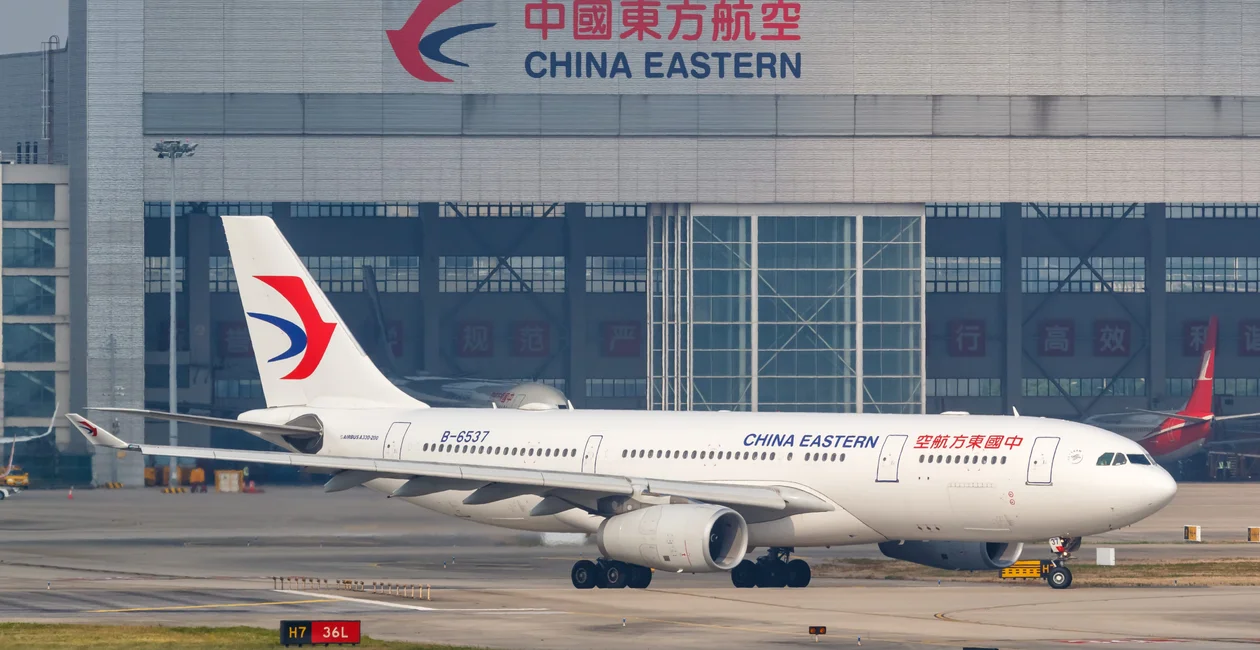
Chinese airlines expand overseas routes
Chinese airlines are working to accommodate the ever-growing "China Travel" fever by introducing new overseas routes. Beginning 28th April, China Eastern Airlines will launch a direct flight from Shanghai Pudong International Airport to Abu Dhabi, becoming the first Chinese airline to fly the route. The airline will also establish a joint venture agreement with Etihad Airways, Abu Dhabi's flag carrier. Sichuan Airlines, on the other hand, is slated to begin direct flights from Chengdu Tianfu in Southwest China's Sichuan Province to Penang in Malaysia with five flights per week from 30th April. It should be noted that Sichuan Airlines began its commercial charter service from Chengdu to Pokhara, Nepal on Tuesday, 18th March. Meeting a growing number of international arrivals The increase in international flight routes among Chinese airlines coincides with a rise in foreign passenger visits at Chinese airports, benefiting from the 240-hour visa-free transit policy. According to the Civil Aviation Administration of China (CAAC) China's international flight routes completed 12.84 million passenger trips in the first two months of 2025. This shows growth of 38.6 percent compared to the same period last year, and a 6.5 percent increase over the same period in 2019. According to Wuhan's entry-exit border inspection station, 11,600 foreign travelers passed through Wuhan Tianhe International Airport in the first 17 days of March, an increase of 23.83 percent over the same period last year. These were mostly from Japan, Malaysia, Singapore, South Korea, and the United States. Among them, 4,200 people entered without a visa under the transit policy, marking a significant increase of 158.83 percent year-on-year. Approximately 60 percent of all passenger visits are for tourism purposes.
No companies found matching your search.
Return To Home
Win 2 nights in a Ocean front Balcony Pool Suite at SALA Samui Chaweng Beach!
SALA Samui Chaweng Beach Resort is Koh Samui’s stunning new 5-star pool suite and villa beach resort and spa. Replete with a white sandy beach, luxury pool villas and all the amenities needed to create a magical getaway drenched in sunshine -- it really is the quintessential Asian paradise.