


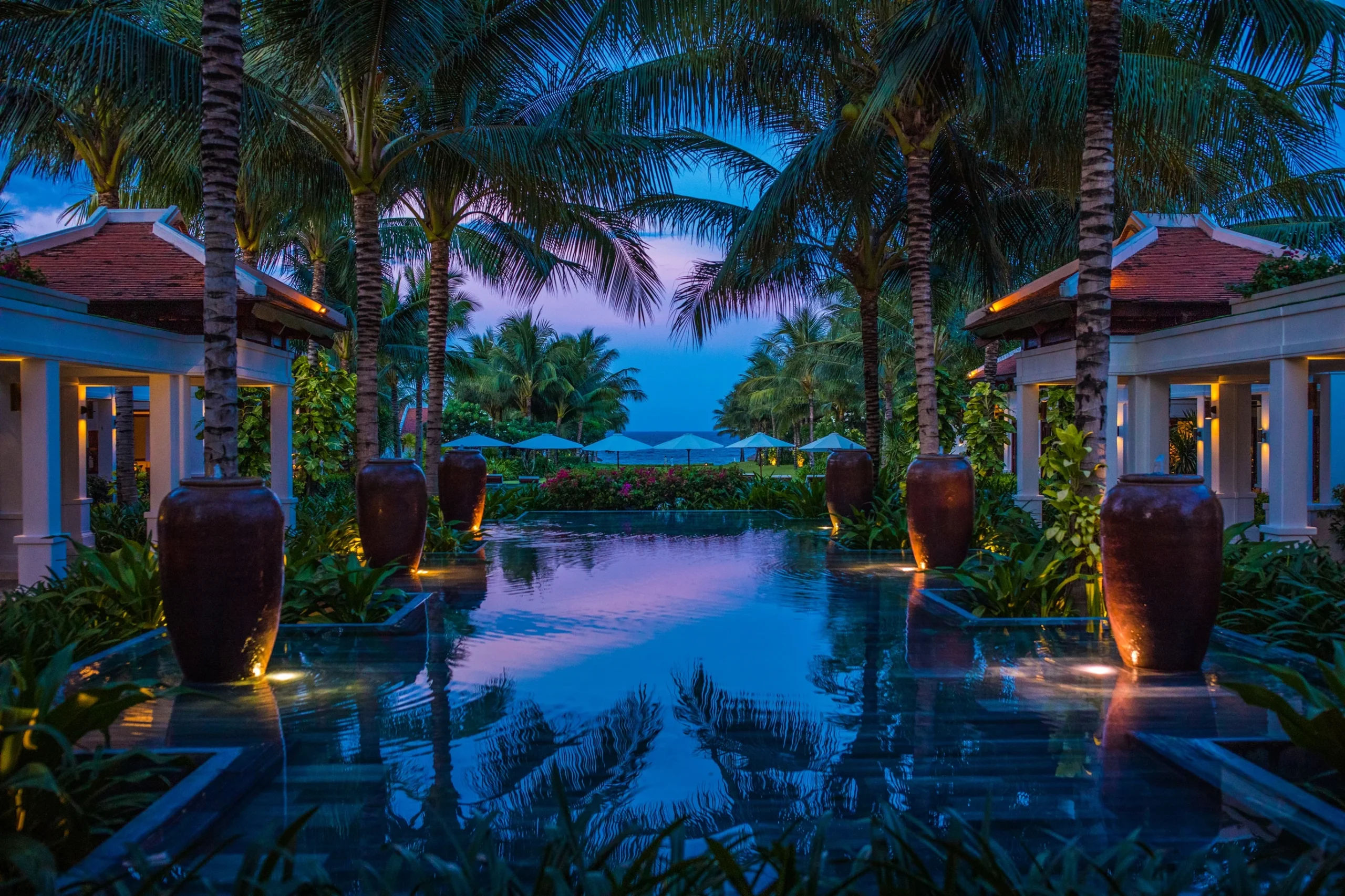
On a sun-drenched March morning, I arrived at The Anam Cam Ranh — a resort where first impressions are framed by palm-lined paths, terracotta-tiled roofs, and an ocean horizon that feels endless. Nestled on Vietnam’s Cam Ranh peninsula, the property is known for its Indochine-inspired architecture, but its true signature lies in how gracefully it balances luxury, heritage, and sustainability.
It may have gained international pop-culture fame as a filming location for The Bachelor, but for returning guests and newcomers alike, The Anam tells a richer story: one of eco-driven design, community collaboration, and a resort that feels deeply woven into its surroundings.
Indochine Elegance, Modern Comfort
The Anam Cam Ranh’s design aesthetic is rooted in Vietnam’s Indochine era. Teak wood, antique tiles, and handmade fabrics create a sense of nostalgia, while every corner is dotted with local art. My villa overlooked the gardens, where winding pathways led past three pools, restaurants, and the spa — a space reimagined with a sensory garden, reflexology path, and yoga studio. It felt like stepping into a cultural time capsule, with just enough modern touches (like USB outlets and soaking tubs) to remind you of the present.
“Luxury here isn’t about excess,” Norbert Meyer, Resort Manager, told me during our conversation. “It’s about creating an environment where guests feel connected — to Vietnam’s culture, to the landscape, and to the community that sustains it.”

Green by Design
That ethos is most visible in the resort’s sustainable practices. A sprawling organic farm supplies the restaurants with fresh greens, herbs, and eggs. Chickens, ducks, and geese roam its shaded corners, while children are invited to learn about farming in supervised programs. In the kitchen, chefs turn this produce into vibrant Vietnamese dishes that are as educational as they are delicious — menus divided by region give diners a taste of the country’s north, center, and south.
The Anam also minimizes waste with glass-bottled water from its own filtration plant, eliminating nearly 88,000 plastic bottles each year. Rice flour straws, bamboo bags, and bamboo-crafted amenities have replaced single-use plastics, while bathrooms feature refillable dispensers rather than throwaway toiletries. Even the keys are eco-conscious: FSC-certified wooden cards that replaced plastic PVC versions, making the resort one of the first in Vietnam to take that step. Energy and water systems also reflect this philosophy. Laundry water is recycled to irrigate the resort’s 3,000 palm-shaded gardens, and solar power supports daily operations. “Sustainability should never feel like a compromise,” Meyer explained. “Guests should experience it as an enhancement — fresher food, cleaner water, more authentic interactions.”
Community at the Core
Beyond its green credentials, the resort quietly champions its local community. Many of its artisans, designers, and hospitality staff hail from the surrounding region. Tiles and textiles are crafted by Vietnamese makers; traditional hats and beach bags placed in rooms are sourced locally; and training programs support long-term employment in Cam Ranh.
Meyer added that stewardship extends beyond the property’s walls: “Our team regularly organizes beach clean-ups along Cam Ranh’s shorelines. It’s about protecting the environment that gives us so much — not just for guests today, but for generations to come.”
The Anam Cam Ranh has become a destination where every guest encounter feels layered — a candlelit dinner by the sea, a stroll through the reflexology garden, or simply swinging in a hammock with the mountains at your back. Yes, it once featured on a reality-TV set, but the real stories are those written every day by families, couples, and solo travelers who leave not just with souvenirs, but with a sense of connection.




