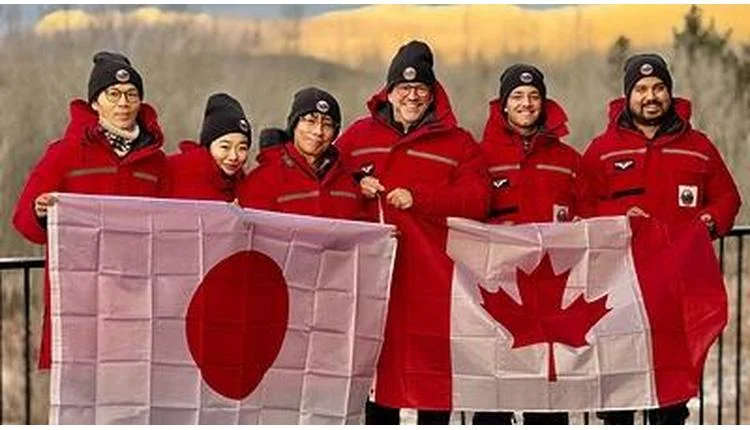
Landing Zones Canada Inc (LZC) and Meisei Electric Co Ltd have embarked on their first joint stratospheric flight campaign in Whitehorse, Yukon, from 23 to 27 November 2026. This initiative, named HoverEX1, marks the inaugural activity under the International Project Consortium Agreement signed by the two companies on 1 October 2026.
The HoverEX1 campaign tests the HoverloonEagle system, which combines Meisei's Hoverloon stratospheric balloon with LZC's situational awareness communications payload. The system is being evaluated for long-range endurance operations at altitudes over 70,000 feet (20 km) in the harsh Arctic conditions, with temperatures plummeting to minus 70 degrees Celsius.
The collaboration is part of the Canada-Japan Comprehensive Strategic Partnership, announced by Prime Ministers Mark Carney and Sanae Takaichi, focusing on defence, security, technology, and innovation. Spencer Fraser, CEO of LZC, expressed gratitude for the swift transition from agreement to execution, highlighting the support from Transport Canada and NAVCANADA.
Masanobu Natsuake, President of Meisei Electric, emphasised the significance of the campaign for stratospheric operations globally and the strengthening partnership with Canada. The initiative supports Canada's need for High-Altitude Platform Systems (HAPS) to provide connectivity in remote regions for defence and emergency response.
Flights are conducted under Transport Canada regulations, in coordination with NAVCANADA, with support from the Arctic Training Centre. This campaign aims to generate valuable data for future high-altitude connectivity solutions in challenging environments
This story was selected and published by a human editor, with content adapted from original press material using AI tools. Spot an error? Report it here.