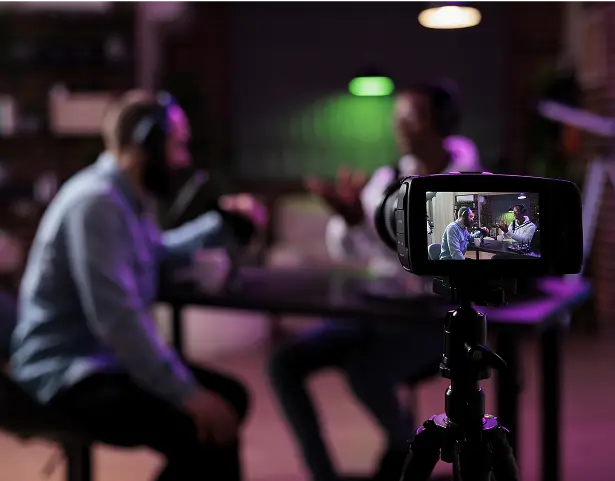
At the TDM Global Summit Bangkok 2026, a forward-looking fireside chat between Hannes Bos of Travel Genius and Shyn Yee Ho of Horwath HTL explored how artificial intelligence is no longer an emerging concept but a rapidly evolving force reshaping hospitality. Moving beyond hype, the discussion focused on practical realities, recent breakthroughs, and what hoteliers must do to stay competitive in an AI-driven landscape.
AI Isn’t New—It’s Just Evolving Fast
For many hospitality professionals, artificial intelligence still feels like a disruptive force waiting on the horizon. However, the reality is that AI has been embedded in hotel operations for over a decade, often without being explicitly recognised. Systems used for revenue management, demand forecasting, rate shopping, and online distribution have long relied on machine learning algorithms to process vast amounts of data and generate insights.
What has changed is not the presence of AI, but its capability and accessibility. Earlier applications were largely confined to structured, rules-based automation, requiring specialised knowledge and interpretation. Today, AI is becoming more intuitive, more powerful, and significantly more accessible to a wider range of users across hotel organisations.
A Defining Shift in the Last Six Months
According to Bos, the past three to six months have marked a critical turning point in how AI is applied in hospitality. The technology has moved beyond simply analysing data to actively generating solutions, strategies, and outputs. This shift from assistance to creation represents one of the most significant developments the industry has seen in decades.
Tasks that traditionally required weeks of collaboration—such as building a commercial strategy or drafting a business plan—can now be completed in a fraction of the time using AI tools. This acceleration is not only improving efficiency but fundamentally changing how decisions are made, enabling faster responses to market dynamics and competitive pressures.
From Back-End Efficiency to Front-Line Impact
AI’s role in hospitality is no longer limited to back-end processes. It is increasingly influencing real-time operations and guest-facing functions. Hotels are using AI to analyse guest movement within lobbies, optimise check-in and check-out processes, and anticipate operational needs such as housekeeping and maintenance.
In food and beverage operations, simple techniques such as capturing periodic images of buffet setups can generate insights into consumption patterns, helping reduce waste and improve menu planning. Similarly, integrating external data sources like flight schedules allows hotels to forecast demand more accurately and adjust staffing levels accordingly. These applications demonstrate that AI is not just about efficiency—it is also about enhancing the overall guest experience.
The Real Barrier? Mindset, Not Technology
Despite the growing availability of AI tools, adoption across the hospitality industry remains uneven. The discussion highlighted that the primary barrier is not cost or technical complexity, but mindset. Many organisations still treat AI as a specialised function, assigning responsibility to a single department or individual.
In reality, AI requires a broader organisational shift. It must be embedded into everyday operations and embraced across all levels of the business. Leadership plays a critical role in driving this change, fostering a culture that encourages experimentation, learning, and continuous adaptation rather than rigid adherence to traditional processes.
Designing the “Autonomous Hotel”
One of the most thought-provoking ideas presented during the session was the concept of designing a hotel with minimal human intervention. By reimagining operations from the ground up—rather than adapting legacy systems—hoteliers can unlock new levels of efficiency and scalability.
This approach encourages a complete rethink of workflows, organisational structures, and service delivery models. It also aligns with the rise of autonomous and agent-based AI systems, which are capable of executing tasks across multiple functions with minimal oversight. The result is a more agile, data-driven operation that can respond dynamically to changing conditions.
Ownership Without Silos
Unlike traditional functions such as revenue management, which eventually developed clear ownership structures, AI does not fit neatly into a single role or department. Its impact spans operations, marketing, distribution, and guest experience, making it inherently cross-functional.
The speakers emphasised that successful AI adoption requires shared accountability across the organisation. While leadership must set the vision and direction, implementation must involve teams at every level. Notably, younger and digitally native employees are emerging as key drivers of adoption, bringing fresh perspectives and a willingness to experiment with new tools and approaches.
Beyond Cost: A Universal Business Case
While labour savings are often cited as a primary driver for AI adoption—particularly in high-cost markets—the value of AI extends far beyond cost reduction. In both high-cost and low-cost environments, AI enables hotels to operate more intelligently and deliver better outcomes.
By automating repetitive and time-consuming tasks, AI allows staff to focus on higher-value activities, particularly those that enhance guest experience. It also improves decision-making speed and accuracy, supports personalised service delivery, and ensures greater consistency across operations. As a result, AI becomes a strategic enabler of both efficiency and growth.
What Comes Next: Autonomous, Agentic Systems
Looking ahead, the next phase of AI in hospitality will be defined by autonomous systems capable of not just analysing data but acting on it. These agentic systems will manage workflows such as pricing, procurement, staffing, and marketing with minimal human intervention.
This shift will dramatically reduce the time required for planning and execution. Processes that once took weeks will be completed in hours or even minutes, enabling hotels to operate in real time. As these capabilities become more widespread, the competitive gap between early adopters and slower-moving organisations is expected to widen significantly.
Getting Started: Start Small, Think Big
For hoteliers who have yet to fully embrace AI, the speakers offered a clear and practical message: start small. Simple use cases, such as analysing operational data or experimenting with AI-generated insights, can provide immediate value and build confidence.
The key to success lies in providing the right context to AI systems, including operational parameters, business objectives, and performance metrics. Rather than relying solely on generic tools, hotels should explore solutions that integrate with their own data environments. Importantly, meaningful progress does not require large-scale investment, but rather a willingness to experiment and rethink established ways of working.
Artificial intelligence is no longer a future consideration for the hospitality industry—it is a present reality that is rapidly reshaping how hotels operate and compete. As the pace of innovation accelerates, the ability to adapt will become a defining factor in long-term success.
For hoteliers, the challenge is not whether to adopt AI, but how quickly they can integrate it into their operations and unlock its full potential.