


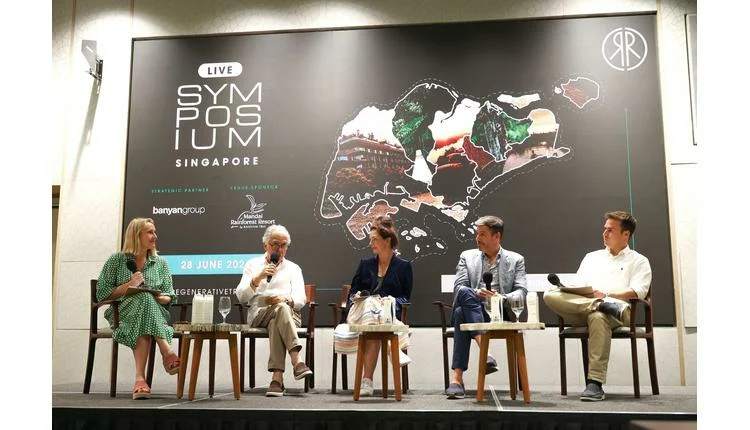
The Regenerative Travel Asia Symposium 2026, held at Mandai Rainforest Resort in Singapore, brought together key figures from the Asia Pacific hospitality sector on 28 June. The event aimed to transition the industry from sustainability to regeneration, featuring discussions on climate, biodiversity, and audience sentiment.
Amanda Ho, founder of Regenerative Travel, emphasised the need for active renewal and restoration, setting the tone for the symposium. Juliet Kinsman, a sustainability journalist, highlighted the economic benefits of renewable energy and warned of the environmental impact of AI data centres. She urged attendees to replace "destination" with "place" to foster a deeper connection with local communities.
Key themes emerged throughout the day, including the risk of "regenerative" becoming a diluted term without clear standards. Panellists stressed the importance of considering a location's carrying capacity before development, using Bali as a cautionary example. They also advocated for integrating local and indigenous knowledge early in the design process.
The symposium highlighted that regeneration and profitability are not mutually exclusive, with lifecycle cost data showing regenerative design can offer faster returns. Practical actions like staff education and local sourcing were identified as impactful without requiring significant capital investment.
Despite progress, greenwashing remains a challenge, with third-party verification suggested as a solution. Live polling revealed a candid self-assessment from attendees, acknowledging the industry's current state as more "extractive" than "regenerative." The symposium underscored the need for ongoing dialogue and collaboration to achieve meaningful change in the hospitality sector
This story was selected and published by a human editor, with content adapted from original press material using AI tools and checked by the editor before publication. Spot an error? Report it here.




