


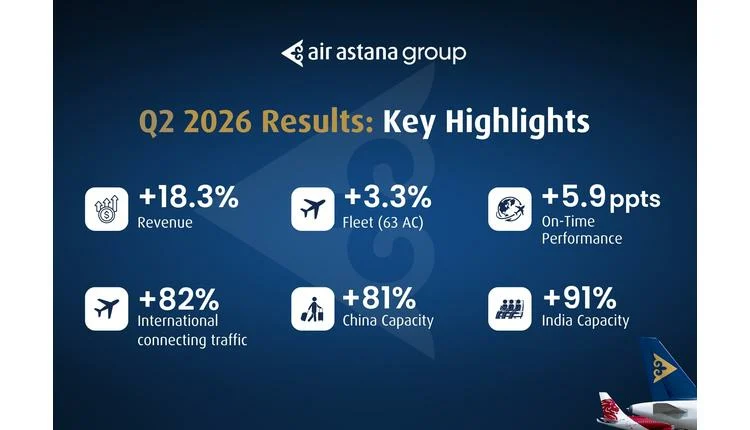
Air Astana Group has announced a significant revenue increase of 18.3% for the second quarter of 2026, reaching $433 million (US$433 million), despite maintaining stable capacity. This growth was primarily fuelled by the airline's strategic shift towards international markets, resulting in an 18.5% increase in revenue per available seat kilometre (RASK). CEO Ibrahim Canliel highlighted the company's dynamic capacity allocation as a key factor in this success.
The airline faced challenges with rising costs, particularly due to higher fuel prices and ongoing issues with Pratt & Whitney engines. However, Air Astana reported a 60% reduction in engine groundings compared to the previous year, with expectations of zero groundings by summer 2027. Despite these cost pressures, the airline's flexibility allowed it to adapt to volatile conditions in the Gulf and redeploy aircraft to meet strong demand in alternative markets.
In the first half of 2026, Air Astana's total revenue and other income rose by 16.1% to $763.9 million (US$763.9 million). The airline's international expansion included new routes to China, India, Europe, and Southeast Asia, enhancing Kazakhstan's role as a regional aviation hub. However, profitability was impacted by a 22.2% increase in cost per available seat kilometre (CASK), outpacing RASK growth.
Looking ahead, Air Astana plans to expand its fleet to 86 aircraft by 2030 and aims to increase its EBITDAR margin to the mid-to-high 20s. The company remains focused on realigning capacity to protect margins amidst inflationary pressures
This story was selected and published by a human editor, with content adapted from original press material using AI tools and checked by the editor before publication. Spot an error? Report it here.






