


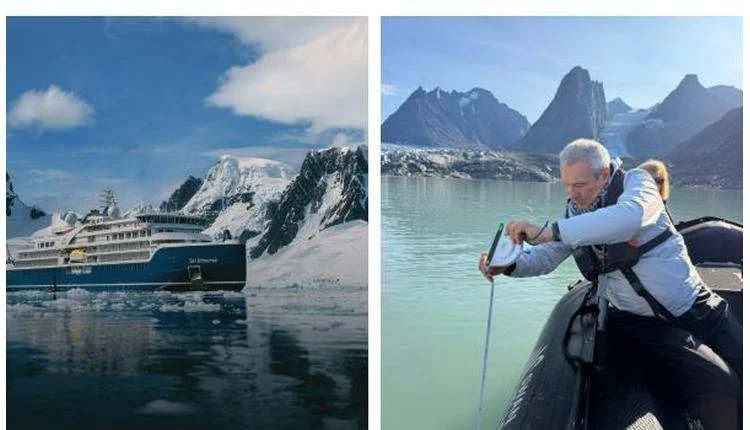
Swan Hellenic has achieved a significant milestone with its Cruising4Oceans initiative being recognised as a pilot site within the GlobalCoast Network, supported by the United Nations Decade of Ocean Science for Sustainable Development. This initiative, centred on Deception Island in Antarctica, marks the first ship-based and southernmost site in the network.
The initiative utilises Swan Hellenic's three expedition ships—SH Vega, SH Diana, and SH Minerva—as a "moving ocean observatory." These ships collect environmental data during their regular cruises, providing valuable information to the global scientific community. Unlike fixed observation stations, this approach leverages vessels already navigating remote and data-scarce waters, building a detailed picture of local ocean conditions.
Andrea Zito, CEO of Swan Hellenic, expressed pride in the initiative's inclusion in the UN-endorsed programme, stating, "We want our ships not simply to visit these places, but to contribute to their understanding and protection." Mario Dogliani, President of SDG4MED, added that the initiative provides crucial data from areas where recurring observations are challenging.
Beyond data collection, Cruising4Oceans involves guests in citizen science activities, such as whale observation through Happywhale, and educational experiences about marine ecosystems. This model, already in use in regions like Svalbard and Greenland, can be replicated wherever commercial vessels travel in data-poor marine areas.
Swan Hellenic's approach demonstrates that expedition ships can actively contribute to science and conservation, transforming journeys into meaningful experiences.
This story was selected and published by a human editor, with content adapted from original press material using AI tools and checked by the editor before publication. Spot an error? Report it here.





