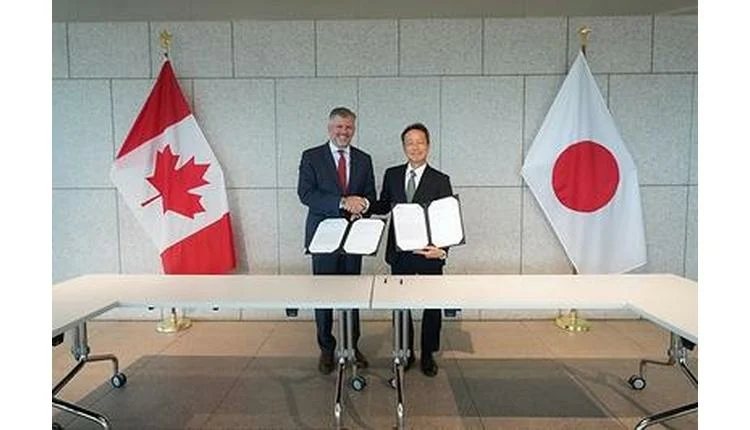
Landing Zones Canada Inc (LZC) and Meisei Electric Co Ltd have announced a strategic partnership to integrate LZC's Eagle remotely piloted aircraft system with Meisei's ultracompact stratospheric observation platform. The agreement, signed at the Embassy of Canada to Japan in Tokyo, aims to advance uncrewed aircraft technology and deepen understanding of the stratosphere for applications in weather monitoring, disaster response, and security.
The collaboration is part of the International Project Consortium Agreement, which supports the Comprehensive Strategic Partnership between Canada and Japan, initiated by Prime Ministers Mark Carney and Sanae Takaichi in March 2026. This partnership focuses on defence, security, advanced technology, and innovation.
Under the agreement, LZC and Meisei will conduct stratospheric flight campaigns in Canada, integrating high-altitude Eagle RPAS with Meisei's balloon platform. Activities will include joint test designs, high-altitude deployment, recovery trials, and evaluation of reusable observation and communications payloads. Initial trials are set to begin this autumn in Alberta and Canada's Arctic, followed by three years of extensive flight campaigns.
Spencer Fraser, CEO of LZC, highlighted the significance of the partnership, stating, "This IPCA is more than a company-to-company agreement. It gives practical effect to the partnership Prime Minister Carney and Prime Minister Takaichi set in motion earlier this year." Masanobu Natsuake, President of Meisei, added, "This collaboration is an important step toward opening new possibilities in meteorological observation, disaster prevention, and aerospace technology."
The initiative aims to support the safe and sustainable use of the stratosphere, strengthening the friendship and partnership between Canada and Japan
This story was selected and published by a human editor, with content adapted from original press material using AI tools and checked by the editor before publication. Spot an error? Report it here.