


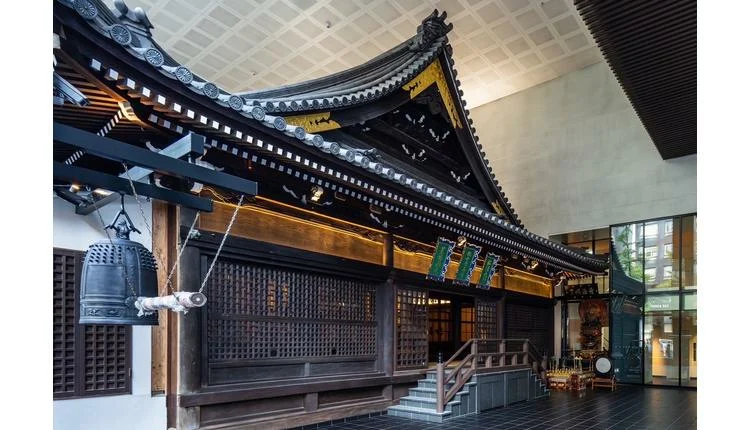
Mitsutera Temple in Osaka has ingeniously preserved its 200-year-old Edo-period main hall by integrating it within a modern 15-storey hotel. This unique conservation effort, completed after a four-year project starting in 2019, showcases a new model for architectural heritage preservation. The temple, located in Shinsaibashi, a bustling entertainment district, offers a striking juxtaposition of historical and contemporary architecture.
The main hall, originally rebuilt in 1808, survived the bombing of Osaka during World War II. To safeguard this historic structure, Mitsutera employed the traditional Japanese technique of *hikiya*, which involves moving a building intact from its foundations. This allowed the construction of a mixed-use building around the hall, featuring a four-star hotel and commercial facilities. The project has been recognised by the architecture publication ArchDaily for its innovative approach.
Beyond architecture, Mitsutera embodies the Osakan spirit of *OKAGE-san*, an expression of gratitude and human connection. This philosophy reflects Osaka's history as a commercial hub, where relationships and community support have been vital. The temple's conservation project mirrors this spirit by preserving the past for future generations.
Mitsutera also offers mindfulness experiences inspired by its 1,300-year Buddhist tradition. Visitors can participate in morning services and cultural activities, providing a deeper understanding of Buddhist culture. Despite its location in a busy district, the temple offers a serene escape, blending history with the vibrancy of modern Osaka.
This story was selected and published by a human editor, with content adapted from original press material using AI tools. Spot an error? Report it here.






