Nepal tourist deaths surge as sudden glacial collapse exposes systemic Himalayan climate risks

Travel Daily Media

e30e53cd-2026-tdm-awards-logo_new-gold

TDM AWARDS - NOMINATE NOW!

Image Courtesy: narcity.com


Nepal’s tourism industry is grappling with a fresh crisis after devastating flash floods tore through Himalayan communities near the Tibetan border, killing at least 162 people and leaving hundreds missing, including foreign tourists, pilgrims and trekking groups.

The disaster struck on August 26, when a mass of water, ice, rock and debris surged through valleys in northern Nepal. Roads and bridges were swept away, settlements were cut off and communications failed across parts of the affected region. Hydropower infrastructure also sustained damage, complicating rescue and recovery efforts.

The scale of the tourism exposure became clearer as authorities began accounting for those caught in the disaster. As on August 27 that 403 people were missing in Nepal, including 341 foreigners, according to earlier figures from Nepali officials. Travellers from India, the United States, Australia, Britain and Canada were among those unaccounted for.

For Nepal’s trekking and pilgrimage sector, the immediate concern is locating travellers and restoring access. The longer-term issue is harder to contain: a disaster of this kind adds another layer of uncertainty to operating in high-altitude regions where conventional seasonal risk assessments are becoming less reliable.

Image Courtesy: daily-sun.com

A glacial collapse, not a typical monsoon flood

The event differs from many of Nepal’s better-known monsoon disasters. Early evidence suggests the flood was triggered by an ice-and-rock avalanche linked to a glacier rather than by prolonged heavy rainfall alone. The collapse appears to have blocked part of the Lhende Khola river system before a sudden release sent water and debris rushing downstream.

The scale of the collapse was such that it was initially mistaken for an earthquake. The U.S. Geological Survey first detected seismic activity near the Nepal-China border, but later determined that the signal had been generated by the glacial collapse. The satellite imagery pointed to an ice-and-rock landslide that produced a debris-filled flood in the Lhende River, around 20 kilometres northeast of the Nepal-China Rasuwagadhi border crossing.

That distinction matters for travel operators. Nepal’s established emergency planning has long focused on monsoon rainfall, landslides, swollen rivers and weather-driven road closures. A sudden glacial or ice-rock collapse leaves far less time for intervention and may not be preceded by the sort of weather alerts on which tour companies typically rely.
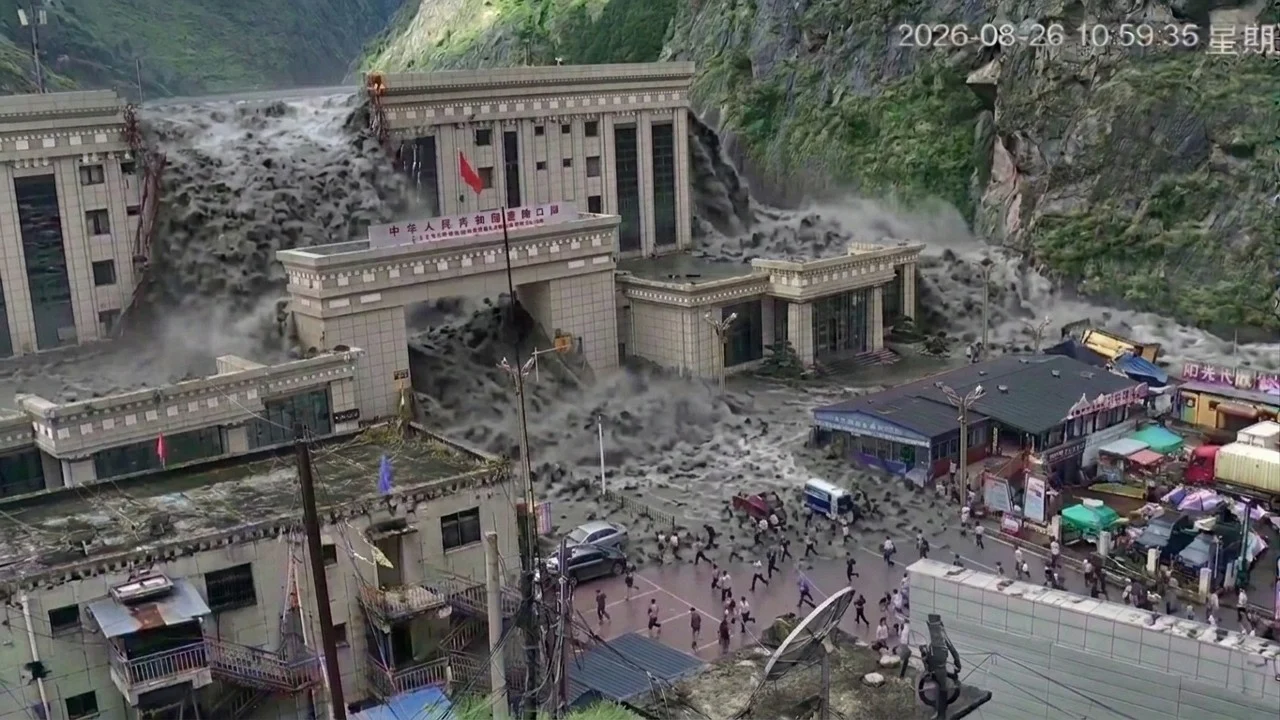
Image Courtesy: www.youtube.com

Foreign tourists and pilgrims caught in the disaster

The affected corridor is commercially important for Nepal’s tourism economy. It links northern Nepal with Tibet and is used by trekkers, organised tour groups and pilgrims travelling towards Mount Kailash and Manasarovar. According to the Associated Press, among the foreigners initially listed as missing were 133 Indians travelling on pilgrimage to Mount Kailash, along with 47 Americans, 34 Australians, 33 British citizens and 24 Canadians.

Australian Foreign Minister Penny Wong said at least 34 Australians travelling on pilgrimage and hiking tours were missing, AP reported. Malaysian authorities were also trying to establish the whereabouts of their nationals as damaged communications made it difficult to determine who had reached safety.

For travel companies, the distinction between missing and confirmed casualties is critical. In remote Himalayan terrain, a group can disappear from contact simply because mobile networks, electricity and road access have failed.

That puts operational preparedness under scrutiny. Accurate passenger manifests, satellite communications, clear escalation procedures and rapid coordination between overseas operators, local ground handlers, guides, hotels and embassies can determine how quickly travellers are accounted for when normal communications collapse.

Image Courtesy: wtop.com

Infrastructure damage could outlast the emergency

The physical destruction may prove to be the most persistent problem for Nepal’s tourism sector. The Associated Press reported that at least 19 bridges and nearly 40 kilometres of road were swept away, while villages and hydropower projects were damaged. Authorities also warned residents and travellers to stay away from several major rivers as rescue work continued.

Reuters reported that helicopters faced difficulty landing in some communities, while roads, electricity supplies and communications around the border region were badly disrupted. For operators selling trekking and pilgrimage programmes, this is not simply a question of whether a destination is technically open. Damaged access roads can remove an area from itineraries for weeks or months. Ground transport has to be rerouted, transfer times become less predictable and hotels may remain inaccessible even when they themselves escape damage.

The commercial effects can spread quickly through the supply chain. Local guides lose departures, transport companies lose contracts and hotels face cancellations. Overseas operators, meanwhile, may have to absorb rebooking costs or find alternative programmes at short notice.

Image Courtesy: en.yenisafak.com

A broader warning for Himalayan tourism

The latest flood also fits a wider pattern of environmental instability across the Himalayas. The same river system was hit by severe flooding in 2025. The Associated Press reported that a flash flood linked to a glacial lake overflowing during high temperatures killed nine people and damaged infrastructure, including a bridge connecting Nepal and China.

Two major events in the same broader corridor in successive years will sharpen questions about how operators price and manage risk in high-altitude destinations. Historically, much of Nepal’s adventure travel calendar has been built around the monsoon. Operators avoided the wettest months, planned trekking seasons around expected weather windows and treated rainfall as the principal environmental variable. That framework now looks increasingly incomplete.

Glacial lake outburst floods, ice-rock avalanches and other high-mountain hazards are more difficult to fit neatly into established seasonal planning. For insurers, this could mean a closer look at policy language around natural catastrophes, evacuation, trip interruption and infrastructure failure. For tour operators, it may mean more conservative routing, stronger contingency plans and greater scrutiny of remote-valley exposure.

The challenge for Nepal is to manage that risk without allowing the disaster to define the country’s entire tourism proposition. The flooding is geographically concentrated, and much of Nepal’s tourism infrastructure remains unaffected. Yet for companies selling Himalayan trekking and pilgrimage travel, the message is harder to dismiss.

The immediate task is rescue, recovery and restoring access. What comes next will test how quickly Nepal’s tourism industry can adapt its operating assumptions to a mountain environment that is becoming less predictable.

 

Categories:Exclusives | Nepal | Tourism

TDM

x Studio

Connect with your clients by working with our in-house brand studio, using our expertise and media reach to help you create and craft your message in video and podcast, native content and whitepapers, webinars and event formats.

Nepal tourist deaths surge as sudden glacial collapse exposes systemic Himalayan climate risks

Image Courtesy: narcity.com


Nepal’s tourism industry is grappling with a fresh crisis after devastating flash floods tore through Himalayan communities near the Tibetan border, killing at least 162 people and leaving hundreds missing, including foreign tourists, pilgrims and trekking groups.

The disaster struck on August 26, when a mass of water, ice, rock and debris surged through valleys in northern Nepal. Roads and bridges were swept away, settlements were cut off and communications failed across parts of the affected region. Hydropower infrastructure also sustained damage, complicating rescue and recovery efforts.

The scale of the tourism exposure became clearer as authorities began accounting for those caught in the disaster. As on August 27 that 403 people were missing in Nepal, including 341 foreigners, according to earlier figures from Nepali officials. Travellers from India, the United States, Australia, Britain and Canada were among those unaccounted for.

For Nepal’s trekking and pilgrimage sector, the immediate concern is locating travellers and restoring access. The longer-term issue is harder to contain: a disaster of this kind adds another layer of uncertainty to operating in high-altitude regions where conventional seasonal risk assessments are becoming less reliable.

Image Courtesy: daily-sun.com

A glacial collapse, not a typical monsoon flood

The event differs from many of Nepal’s better-known monsoon disasters. Early evidence suggests the flood was triggered by an ice-and-rock avalanche linked to a glacier rather than by prolonged heavy rainfall alone. The collapse appears to have blocked part of the Lhende Khola river system before a sudden release sent water and debris rushing downstream.

The scale of the collapse was such that it was initially mistaken for an earthquake. The U.S. Geological Survey first detected seismic activity near the Nepal-China border, but later determined that the signal had been generated by the glacial collapse. The satellite imagery pointed to an ice-and-rock landslide that produced a debris-filled flood in the Lhende River, around 20 kilometres northeast of the Nepal-China Rasuwagadhi border crossing.

That distinction matters for travel operators. Nepal’s established emergency planning has long focused on monsoon rainfall, landslides, swollen rivers and weather-driven road closures. A sudden glacial or ice-rock collapse leaves far less time for intervention and may not be preceded by the sort of weather alerts on which tour companies typically rely.

Image Courtesy: www.youtube.com

Foreign tourists and pilgrims caught in the disaster

The affected corridor is commercially important for Nepal’s tourism economy. It links northern Nepal with Tibet and is used by trekkers, organised tour groups and pilgrims travelling towards Mount Kailash and Manasarovar. According to the Associated Press, among the foreigners initially listed as missing were 133 Indians travelling on pilgrimage to Mount Kailash, along with 47 Americans, 34 Australians, 33 British citizens and 24 Canadians.

Australian Foreign Minister Penny Wong said at least 34 Australians travelling on pilgrimage and hiking tours were missing, AP reported. Malaysian authorities were also trying to establish the whereabouts of their nationals as damaged communications made it difficult to determine who had reached safety.

For travel companies, the distinction between missing and confirmed casualties is critical. In remote Himalayan terrain, a group can disappear from contact simply because mobile networks, electricity and road access have failed.

That puts operational preparedness under scrutiny. Accurate passenger manifests, satellite communications, clear escalation procedures and rapid coordination between overseas operators, local ground handlers, guides, hotels and embassies can determine how quickly travellers are accounted for when normal communications collapse.

Image Courtesy: wtop.com

Infrastructure damage could outlast the emergency

The physical destruction may prove to be the most persistent problem for Nepal’s tourism sector. The Associated Press reported that at least 19 bridges and nearly 40 kilometres of road were swept away, while villages and hydropower projects were damaged. Authorities also warned residents and travellers to stay away from several major rivers as rescue work continued.

Reuters reported that helicopters faced difficulty landing in some communities, while roads, electricity supplies and communications around the border region were badly disrupted. For operators selling trekking and pilgrimage programmes, this is not simply a question of whether a destination is technically open. Damaged access roads can remove an area from itineraries for weeks or months. Ground transport has to be rerouted, transfer times become less predictable and hotels may remain inaccessible even when they themselves escape damage.

The commercial effects can spread quickly through the supply chain. Local guides lose departures, transport companies lose contracts and hotels face cancellations. Overseas operators, meanwhile, may have to absorb rebooking costs or find alternative programmes at short notice.

Image Courtesy: en.yenisafak.com

A broader warning for Himalayan tourism

The latest flood also fits a wider pattern of environmental instability across the Himalayas. The same river system was hit by severe flooding in 2025. The Associated Press reported that a flash flood linked to a glacial lake overflowing during high temperatures killed nine people and damaged infrastructure, including a bridge connecting Nepal and China.

Two major events in the same broader corridor in successive years will sharpen questions about how operators price and manage risk in high-altitude destinations. Historically, much of Nepal’s adventure travel calendar has been built around the monsoon. Operators avoided the wettest months, planned trekking seasons around expected weather windows and treated rainfall as the principal environmental variable. That framework now looks increasingly incomplete.

Glacial lake outburst floods, ice-rock avalanches and other high-mountain hazards are more difficult to fit neatly into established seasonal planning. For insurers, this could mean a closer look at policy language around natural catastrophes, evacuation, trip interruption and infrastructure failure. For tour operators, it may mean more conservative routing, stronger contingency plans and greater scrutiny of remote-valley exposure.

The challenge for Nepal is to manage that risk without allowing the disaster to define the country’s entire tourism proposition. The flooding is geographically concentrated, and much of Nepal’s tourism infrastructure remains unaffected. Yet for companies selling Himalayan trekking and pilgrimage travel, the message is harder to dismiss.

The immediate task is rescue, recovery and restoring access. What comes next will test how quickly Nepal’s tourism industry can adapt its operating assumptions to a mountain environment that is becoming less predictable.


Join The Community

Stay Connected

Facebook

101K

Twitter

3.9K

Instagram

1.7K

LinkedIn

19.9K

YouTube

0.2K

TDM

x Studio

Connect with your clients by working with our in-house brand studio, using our expertise and media reach to help you create and craft your message in video and podcast, native content and whitepapers, webinars and event formats.

Scroll to Top


