Kamal Munasinghe
Colombo is making a more determined play for Asia’s meetings and events business, backed by new hospitality and entertainment infrastructure that could change how international planners view the Sri Lankan capital. At the centre of that push is Cinnamon Life at City of Dreams Sri Lanka, whose large-scale meetings, accommodation, dining and entertainment offering gives Colombo something it has previously lacked: the ability to host major conferences, incentives and social events within a single integrated development. For Sri Lanka, the opportunity extends beyond filling hotel rooms. MICE could help lift visitor spend, extend stays and bring more corporate and incentive traffic into a tourism economy that is increasingly looking beyond arrival numbers as its primary measure of success.
Competition, however, is formidable. Singapore, Bangkok, Kuala Lumpur and Bali have spent years building their international events credentials, while Colombo still faces challenges around destination visibility, coordinated marketing, air connectivity and skilled MICE talent. India remains an important opportunity because of its proximity and outbound scale, but Sri Lanka is also looking towards the Middle East, Europe, Australia and Southeast Asia for future growth.
In this interview with Travel Daily Media (TDM), Kamal Munasinghe, Senior Vice President – Colombo Hotels, Cinnamon Hotels & Resorts, and General Manager – Cinnamon Life at City of Dreams Sri Lanka, discusses what it will take to put Colombo on the international MICE shortlist. He also talks about the opportunity from India, the need for Sri Lanka to pursue higher-value tourism, Colombo’s evolution from gateway to destination, and why the industry may need to compete collectively for the city before competing individually for the business.
Travel Daily Media (TDM): Colombo has traditionally been better known for leisure and corporate travel than major international conventions. Can it realistically emerge as a leading South Asian MICE hub, and what still needs to change to make that happen?
Kamal Munasinghe (KM): I believe Colombo's constraint has never really been capacity. City of Dreams Sri Lanka alone gives the city over 160,000 square feet of flexible event space, more than sufficient to host large international programmes. The real gap has been visibility: Colombo simply has not featured on enough shortlists when organizers sit down to plan their events.
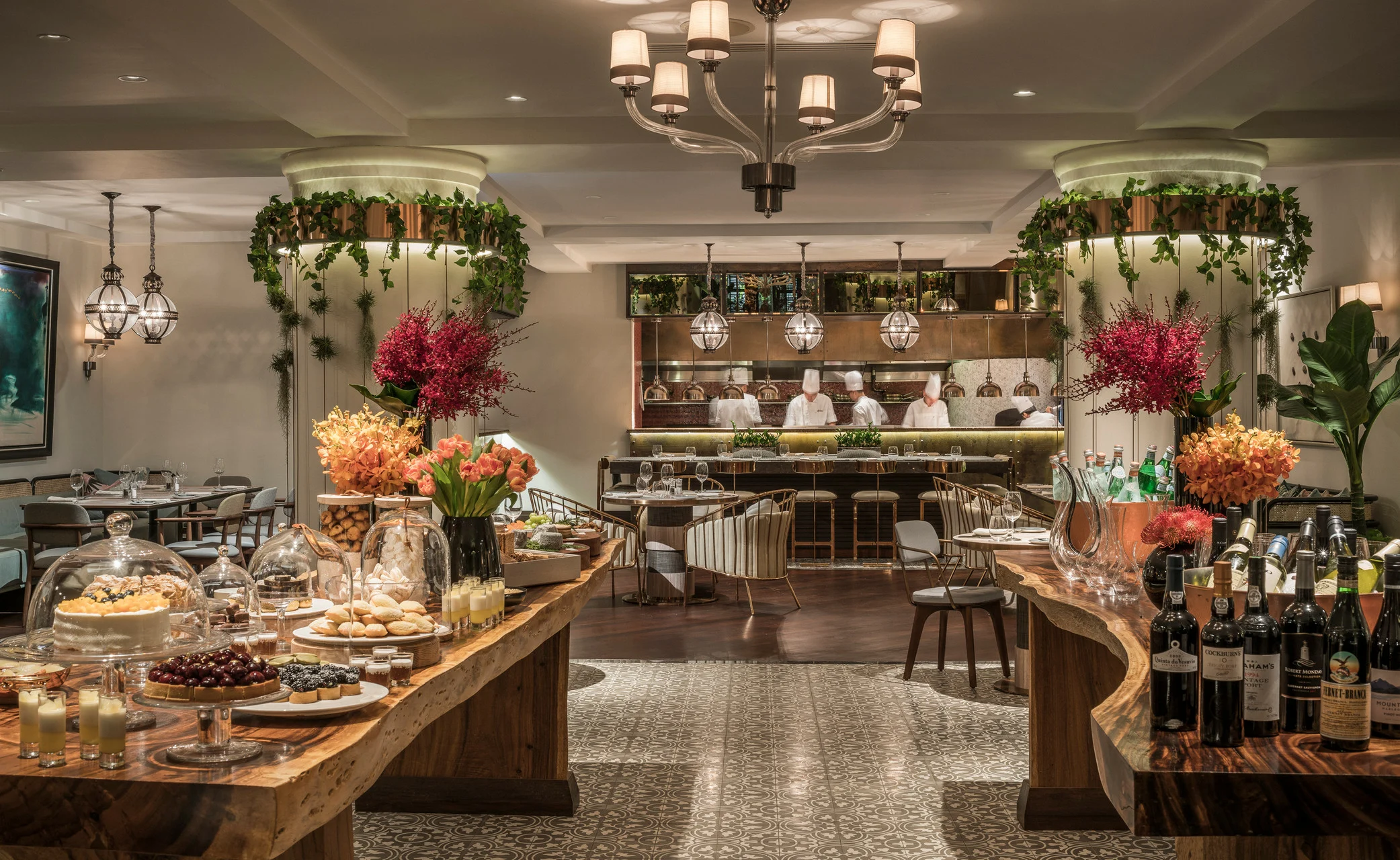
Before this development, an organizer looking at Colombo would have seen a scattering of good individual hotels, each capable of handling a piece of a large event but not the whole of it. What has changed is that there is now one address in the city that can carry a conference, an exhibition, a gala and an entertainment programmed from start to finish. That is what turns Colombo from a city considered on request into a city considered by default.

TDM: City of Dreams significantly expands Colombo’s meetings, convention and entertainment capacity. Which international MICE segments and source markets are you targeting, and where do you see the strongest growth potential?
KM: We think about this less in terms of a delegate arriving for a meeting and leaving the next morning, and more in terms of the full arc of a trip. A group can spend the day in session, move into dinner and entertainment in the evening, and still have the country available to them if they extend their stay.
India remains important given its scale, but I would also highlight the Middle East, Europe, Australia and, increasingly, Southeast Asia – markets such as Malaysia, Thailand and Vietnam, as the markets I expect to grow fastest from here. These are already well-established leisure source markets for Sri Lanka, and we are now seeing early interest from them in corporate and incentive travel, as well as destination weddings, which suits our ability to combine accommodation, events, dining and entertainment under one roof. As connectivity from these regions improves, I expect the mix of our international business to broaden well beyond any one country.

TDM: Sri Lanka competes for events with established destinations such as Singapore, Bangkok, Kuala Lumpur and Bali. What can Colombo offer international event planners that allows it to compete on experience and value rather than price alone?
KM: I would not claim we can out-build Singapore, Bangkok, Kuala Lumpur or Bali, and I would be cautious about implying otherwise. Singapore in particular has integrated resorts with meeting and exhibition space many times the size of ours, and I do not think Colombo wins by trying to match that scale.
Our strength lies in what we naturally are: a compact, connected city. A delegate here spends far less time in traffic and far more time actually engaging with waterfronts, with cultural districts, with the city itself. Colombo is also a city in transition. New waterfront developments, improved public spaces, lifestyle districts and mixed-use precincts are creating fresh event experiences that simply did not exist a few years ago. Business and leisure can be combined here without complexity, the cultural immersion is authentic rather than staged, and the hospitality is warm and personal in a way that is harder to manufacture at scale. That, together with the fact that we are still an emerging destination rather than one visited to saturation, is where much of our value proposition lies.
What we also offer is proximity to variety. A delegate here can be in session in the morning, at dinner in the evening, and within two or three hours of rainforest, tea country or the southern coast the next day. None of those four destinations can offer that same range of landscape and culture within such a short distance of the conference room. So the case for Colombo is not about matching anyone else's facilities. It is about what a business trip here can turn into once the working sessions are done.

TDM: India is one of Sri Lanka’s most important short-haul markets. How large is the opportunity from Indian corporate meetings, incentive groups, conferences and destination weddings, and what would accelerate that business?
KM: The scale is considerable. India was our largest source market in 2025, with over 531,000 visitors, more than double the number from the next largest market. What I find more interesting than the total figure is how much of that opportunity still sits outside pure leisure travel.
Corporate meetings, incentive groups and conferences are the bigger part of this. India is fast becoming one of Asia's largest outbound corporate travel markets, and City of Dreams gives us the scale to compete for that business in a way Colombo could not before. Destination weddings sit alongside this as their own strong category: Indian wedding parties tend to book across multiple venues over several days, and we can bring the ceremony, receptions, entertainment and accommodation for a large guest list together in one place.
What accelerates all of this is connectivity and convenience. We now have more than 200 flights a week between India and Sri Lanka, visa-on-arrival for Indian nationals, and the flexibility to pay in Indian rupees and via UPI, all of which make Sri Lanka an easy choice for Indian travellers and event planners alike.

TDM: Sri Lanka’s tourism industry has moved from recovery towards growth. Should the next phase focus less on headline arrival numbers and more on visitor spend, length of stay and higher-yield segments such as MICE and luxury travel?
KM: I believe it should. Sri Lanka recorded 2.36 million arrivals in 2025, a record year, generating approximately 3.2 billion US dollars in tourism revenue. Arrivals tell us how many people came. They do not tell us what each of those visits was actually worth to the economy.
Over time, I would also like to see Sri Lanka measure the economic impact of major conferences and events more systematically. Around the world, destinations increasingly track delegate spending, additional hotel nights, local procurement and post-event leisure extensions. Those are the kinds of metrics that help demonstrate the wider value of the MICE sector.

TDM: Colombo is often treated as the gateway to Sri Lanka rather than a destination in its own right. Can large-scale MICE, entertainment, dining and integrated hospitality developments change that perception and encourage visitors to spend more time in the capital?
KM: Cities become destinations when they give visitors reasons to stay beyond necessity, and I think that is the narrative Colombo now needs to tell. Great cities compete on programming as much as they do on infrastructure – events, concerts, festivals, nightlife, dining, and a city where there is always something happening becomes a destination rather than a stopover.
This is genuinely one of the bigger opportunities ahead of the city, and it is close to the reasoning behind how City of Dreams was designed. We were not interested in adding another hotel to Colombo's skyline. We wanted an integrated resort with enough going on inside it – its own calendar, its own culinary experiences, its own entertainment, that people would come for that reason alone.
The regular calendar of large-scale entertainment productions we have introduced is a good example. Touring productions of this standard simply did not come to Colombo with any consistency before, and there was no single venue built to host them properly. Now that there is, people have a reason to plan a weekend around the city itself rather than treating it as forty-eight hours to get through before the rest of the holiday begins.
TDM: Air connectivity, destination marketing, infrastructure and skilled talent all influence the ability to win international events. Where are the biggest gaps in Sri Lanka’s MICE and hospitality ecosystem today?
KM: Before I get to the two structural gaps, I would flag a mindset shift that has to happen first: we need to win events for Colombo as a city before we compete with each other over which property hosts them. Too often the instinct has been to compete internally for a guest who is already coming, rather than working together to make sure the event chooses Colombo over Singapore or Bangkok in the first place.
With that said, I would point to two things. The first is coordination. Hotels are investing in infrastructure, MICE business is being actively promoted, and airlines are expanding their networks, but these efforts still tend to be presented to the international market separately rather than as one proposition. Our Chalo Colombo initiative, which paired a new direct flight from Ahmedabad with City of Dreams as the destination at the other end, is one example of what it looks like when connectivity and destination are marketed together, and I would like to see more of that model applied to other source markets.
The second, and the one I would weigh more heavily, is talent. We can expand ballrooms and add flight routes faster than we can train the people needed to run large-scale events well. That gap tends to stay hidden until several major events land in the same week, and then it becomes very visible. Closing it is a slower task than adding square footage, but it matters just as much.

TDM: Looking towards 2030, what would success look like for Sri Lanka tourism and Colombo’s hotel sector—not simply in visitor numbers, but in the quality of demand, international events secured and economic value generated by each visitor?
KM: By 2030, I would like an international company planning a conference or incentive trip to include Colombo on its shortlist automatically, without needing to be convinced first, and for City of Dreams to be a large part of the reason that shortlist has changed.
More specifically, I would like Colombo to be recognised as one of South Asia's leading MICE destinations. Not because it copied Singapore or Bangkok, but because it developed its own proposition, built around integrated hospitality, authentic experiences and easy access to the rest of Sri Lanka.
Within that, I would like us to think of City of Dreams less as a single integrated resort and more as a catalyst for the city as a whole. It invites people to Colombo in the first place, gives them reasons to stay longer once they are here, and makes it possible to bring larger incentive groups to the city than before. If that catalytic role is working, it should show up in tourism revenue and average spend per visitor growing faster than the arrivals count itself. That is what will tell us the industry moved toward higher value visits rather than simply more of them.