


For decades, the global shorthand for the Maldives was simple: an aspirational escape defined by pristine white sands, an isolated ‘one island, one resort’ layout, and overwater villas stretching out into an endless turquoise horizon. It was a formula built on geographic isolation and high-end privacy. However, as the travel landscape shifts in 2026, the global traveller is changing. Today's visitors do not just want to look at the scenery, they want to connect with it, experience it, personalise it, and ensure their footprint preserves it.
To maintain its competitive edge against other luxury island destinations, the Maldives is executing a major strategic evolution. By overlaying its natural strengths with an aggressive digital transformation, artificial intelligence (AI), and data analytics, the nation is redefining luxury. It is transitioning from a traditional sun-and-sand destination into a deeply personalised, purpose-led ecosystem where tech-driven efficiency coexists with rigorous ecological guardianship.

The Paradigm Shift: Generic to Granular Marketing
Historically, marketing an island paradise meant broadcasting a singular image of luxury. However, the modern global market is highly fragmented. The Visit Maldives Corporation (VMC) is addressing this by leaning into data-led and hyper-personalised destination marketing.
The foundation of this strategy rests on the massive volume of intelligence processed through national tourism frameworks. In early 2026, the Ministry of Tourism and Civil Aviation (MOTCA) enhanced its tracking framework to move beyond capturing only traditional air-bound holidaymakers. By integrating comprehensive administrative and immigration data, the Maldives now tracks all international visitor types, including business arrivals and cruise passengers. This comprehensive data pipeline provides detailed breakdowns of visitor demographics, residences, and behaviours, giving stakeholders the raw intelligence needed to power targeted campaigns.
Key Performance Indicators: The Maldives Tourism Landscape (Jan–Apr 2026)
The data collected during the first four months of 2026 highlights the massive scale of the operational landscape being analysed:
| Operational Indicator | Key Statistical Insights (2026 Performance) |
| Total International Arrivals | 801,436 total visitors entered the country, marking an expansion in overall market data tracking. |
| Air vs. Sea Segmentation | 777,508 arrivals came through Velaana International Airport, while sea ports welcomed 13,808 cruise passengers. |
| Demographic Distribution | Women made up the majority of tourist arrivals, with 423,029 females compared to 358,333 males. |
| Beds & Infrastructure | An average of 67,392 beds were operational across a registered network of 1,321 tourist establishments. |
| Volume of Stay | Visitors generated 5,134,782 total bed nights, maintaining an average stay duration of 7.1 days. |

Mapping the Evolved Traveller: Emerging Segments and Geographic Shifts
While the Maldives remains a premier global destination for luxury honeymoons and romantic getaways, data analytics reveal a clear diversification of the passenger mix. Demand is increasingly driven by families, eco-conscious travellers, wellness seekers, adventure enthusiasts, solo explorers, and MICE (Meetings, Incentives, Conferences, and Exhibitions) groups.
The geography of demand is also shifting. The top source markets for the first four months of 2026 show a mix of resilient European strongholds and surging Asian hubs:
Top 5 Source Markets by Country of Residence (Jan–Apr 2026)
- China: 115,589 residents
- Russia: 97,004 residents
- United Kingdom: 70,752 residents
- Italy: 61,341 residents
- Germany: 50,617 residents
Younger demographics, heavily influenced by short-form video content, influencer marketing, and digital sports partnerships, are choosing their accommodations with distinct regional preferences.
According to MOTCA data, 69.7% of all arriving tourists (544,250 visitors) prefer traditional resorts. However, a substantial 25.3% (197,627 visitors) now choose local guesthouses, signalling a growing demand for experiential, community-integrated travel.
Accommodation Preferences by Key Nationalities (2026 Share %)
Chinese: 63.1% Resorts | 31.9% Hotels
Russian: 75.0% Resorts | 21.9% Hotels
British: 86.4% Resorts | 2.2% Guesthouses
Indian: 75.7% Resorts | 21.1% Hotels
Note: Remaining percentages are distributed across alternative accommodation types like tourist vessels and guesthouses.

The Tech-Driven Journey: Frictionless Hospitality
From initial booking to the post-stay review, technology has transformed the Maldivian guest journey into a connected, end-to-end digital experience. Because the country's unique geography relies on decentralised transit across multiple atolls, domestic connectivity is a key focus for digital optimisation.
Before even arriving at one of the country's main entry points such as Velana International Airport, which processed 777,508 visitors in early 2026, travellers interact with targeted digital campaigns and destination platforms. Upon arrival at the properties, in-resort technology takes over. Digital concierge services allow guests to design their day via mobile apps. Micro-targeted luxury means that data systems remember a guest’s preferred room temperature, map out personalized wellness journeys, handle touchless activity bookings, and adjust dining menus to meet exact dietary preferences.
Balancing Customisation and Marine Conservation
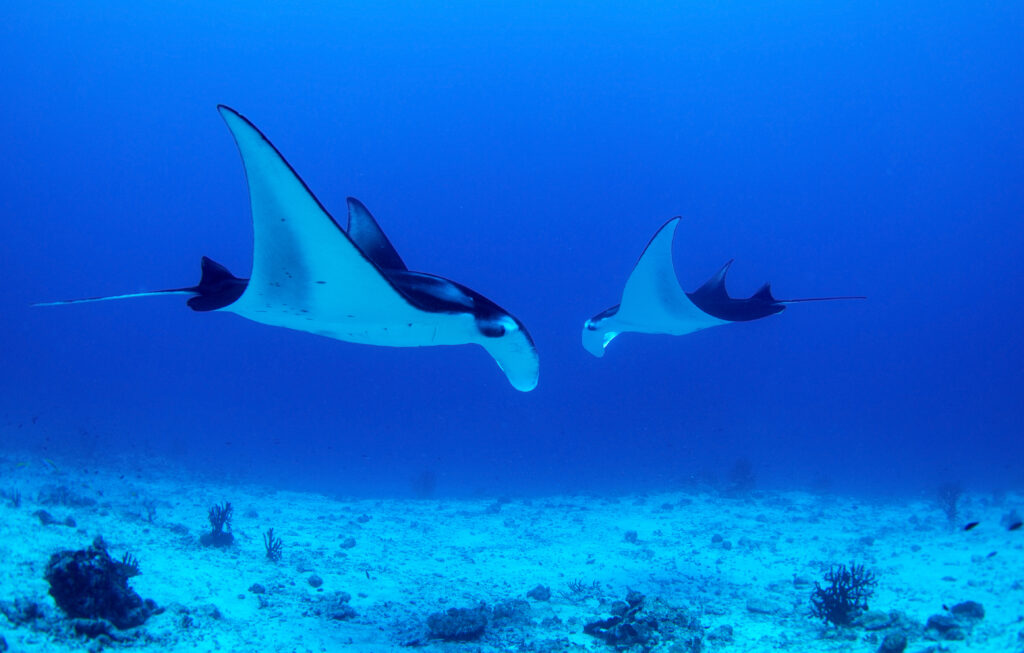
The modern definition of luxury has evolved beyond lavish indulgence; today, it is deeply tied to sustainability and environmental responsibility. In an island ecosystem highly vulnerable to climate change, the true innovation is finding a balance where hyper-personalised guest experiences actively support environmental conservation.
This philosophy is central to the VMC’s "Ocean Nation" initiative, an approach that encourages incoming global travellers to view themselves not just as tourists, but as true Guardians of the Ocean. This ethos is deeply integrated into the strategic planning for the upcoming "Visit Maldives Year 2027".
Across the country's major tourism hubs, operators are embedding sustainable practices directly into their guest itineraries. For example, in the highly popular Kaafu Atoll, which hosted 43.5% of all visitors (340,096 tourists) in early 2026, resorts are blending high-end hospitality with active environmental stewardship.
Atoll Distribution: Where Visitors Stay (Jan–Apr 2026)
Kaafu Atoll - 43.5%
Alifu Dhaalu - 9.0%
Alifu Alifu - 7.7%
Raa Atoll - 7.6%
Baa Atoll - 5.8%
Other Atolls - 26.4%
Based on distribution data for resorts, hotels, and guesthouses.

The Rise of Experiential Attractions
To maintain its competitive edge against global rivals, the Maldives is diversifying its experiences beyond luxury overwater villas and pristine beaches. The focus has shifted to creating interactive, educational, and culturally immersive concepts.
Several unique initiatives are successfully driving engagement with the destination:
- The Dhoonier Wreck Project & Underwater Heritage: These initiatives invite divers to explore submerged history, transforming a standard dive into an educational journey focused on marine archeology
- Burunu Boma & Local Cultural Trails: These experiences immerse visitors in Maldivian folklore, local history, and traditional island storytelling
- The Maldives Book of Records: A novel initiative that encourages visitors to participate in and witness record-breaking local achievements
- Natural Phenomena & Gastronomy: Properties are curate specialized excursions around stargazing, bioluminescence tracking, authentic Maldivian culinary journeys, and deep-sea wellness treatments
These activities reinforce a powerful message that the Maldives is not just a place to relax but a destination to explore, learn, contribute, and connect.

The Five-Year Outlook: Driving Long-Term Value over Volume
As the Maldives looks toward the next five years, its tourism strategy is guided by five major foundational shifts:
- Value Over Volume: The primary metric of success is shifting away from raw arrival numbers toward long-term economic value, focusing on accelerating total tourism revenue, increasing bed nights, extending the average length of stay, and boosting visitor spend.
- Purposeful Luxury: Premium hospitality will remain inextricably linked to holistic wellbeing, verified sustainability, and deep cultural immersion.
- Advanced AI Integration: Comprehensive use of AI, machine learning, and real-time data analytics will seamlessly power every stage of the traveller’s journey.
- Deep Ocean Identity: Excursions will continue to move toward immersive experiences built around conservation, local communities, sports, and unique culinary identities.
- Participatory Environmentalism: Travel will become highly participatory, with guests actively joining sustainability pledges, supporting reef conservation, and practising responsible diving.
By combining its natural beauty with cutting-edge digital tools and a strong commitment to conservation, the Maldives is setting a new standard for global luxury tourism. It proves that a destination can successfully leverage technology and data to protect its environment, delivering a smarter, more sustainable, and deeply personalised experience for the modern traveller.




