When U.S. Special Presidential Envoy for Tourism Nick Adams took the stage at the 2026 World Travel & Tourism Council (WTTC) Global Summit in Malta, he wasn't just there to collect his Global Leadership Pioneer award. He was there to field uncomfortable questions from the assembled 30 Journalists including TDM's very own GM & Managing Editor, Christopher Head.
Trade friction. Tariff arguments. Bottlenecks at passport control. A noticeable chill in Canadian border crossings.
In the high-stakes arena of international travel diplomacy, political headlines have a habit of stepping on the travel industry's toes. But Adams’ message to the room of global hospitality executives, destination marketers, and travel advisors was simple: keep the doors open, ditch the friction, and stop letting geopolitical noise sour consumer travel.
“We are in the business of happiness, and a tourism boycott is misery... As leaders in the tourism space, we should be pro-tourism, not anti-tourism.”
— Nick Adams, U.S. Special Presidential Envoy for Tourism
It’s an ambitious stance at a critical juncture. Washington has set a staggering goal: 100 million international visitors annually by 2030. Reaching that target won't happen through slick, polished ad campaigns alone—it will take a total rethink of how the country welcomes the world.
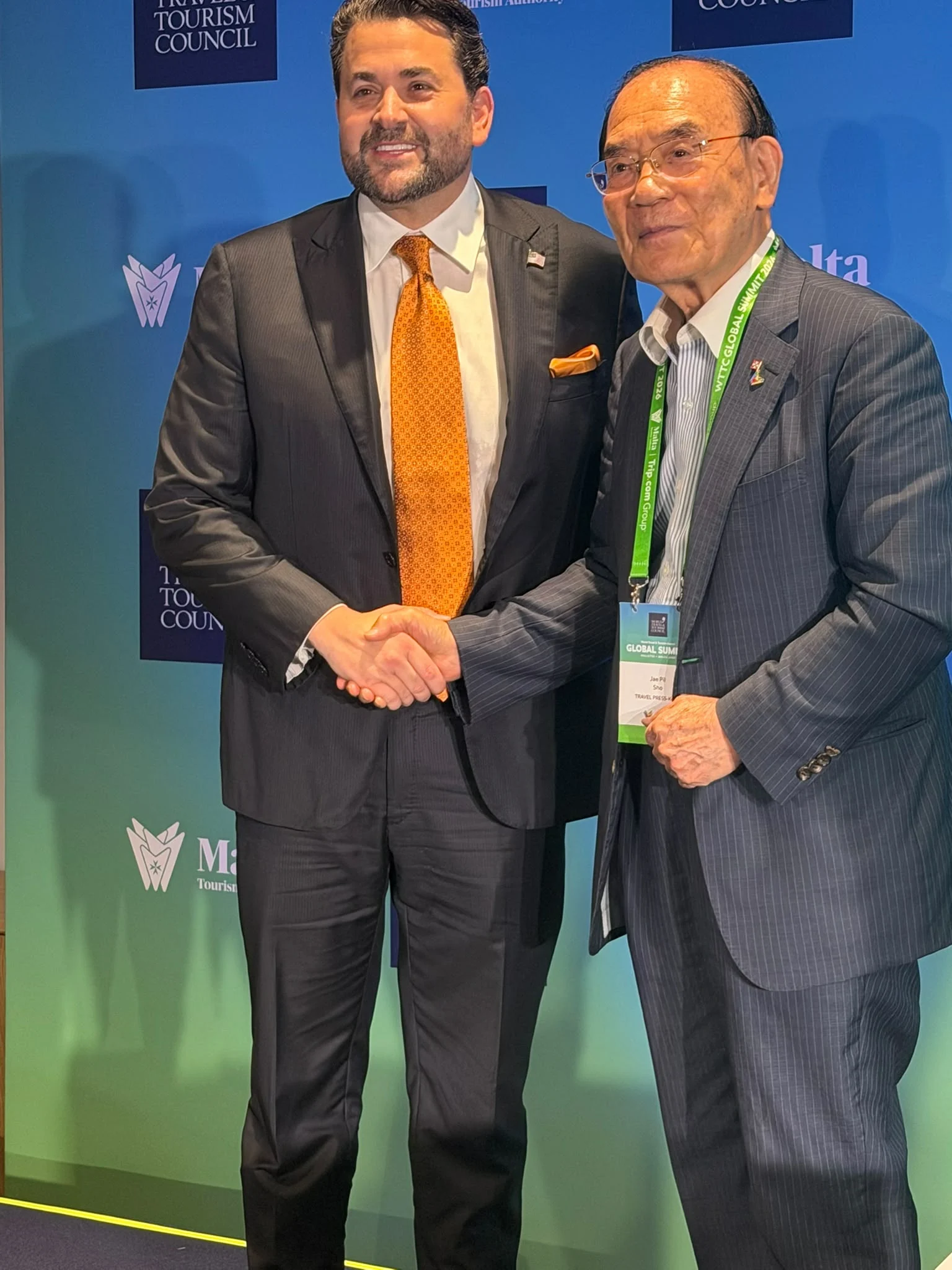
Nick Adams with Jae Pil Sho from Travel Press South Korea
The Decade of the Mega-Event
If there’s a silver bullet in America's playbook, it’s sports and culture. The U.S. is stepping into an unprecedented ten-year run of global host duties that few nations could ever pull off.
Riding the wave of the FIFA World Cup, the runway leads directly into the 2028 Los Angeles Olympic and Paralympic Games. Soon after come both the Men’s and Women’s Rugby World Cups, the FIFA Women’s World Cup, and a major federal push backing Miami’s bid for World Expo 2035.
For destination marketers, the real opportunity isn't just filling stadiums in LA or Miami—it's the spillover. Adams’ team is actively pushing initiatives to funnel those millions of international event-goers out of the major host hubs and into secondary markets, rural scenic routes, and smaller regional towns that rarely get global spotlight time.
Trade Friction vs. Peer Trust
Yet, big events can't completely hide political headlines. When trade talks turn sour or regulatory friction hits the news cycle, potential visitors hesitate.
How do travel intermediaries and advisors keep bookings steady when headline anxiety takes over?
The key, according to Adams, lies in authentic peer-to-peer proof. Traditional destination marketing videos are losing ground to unscripted, user-generated content from real travelers. Younger global demographics aren't looking for manufactured tourist traps; they want everyday lifestyle tourism—a regional food hall, a quirky main street, or genuine local hospitality.
When policy debates create noise, authentic stories from returning travelers do far more heavy lifting than expensive ad spots. For travel trade partners across Canada, Europe, and Latin America, sharing real traveler experiences is proving to be the most effective way to reassure hesitant clients.
Five-Star Service at Passport Control
Perhaps the most surprising revelation from the summit was Adams’ plan to fix the country's most notorious friction point: border customs.
Nothing ruins a trip faster than a two-hour queue and a cold reception at immigration. Recognizing that the arrival gate sets the tone for an entire vacation, Adams’ office is bringing in five-star hospitality experts—the same firms that train luxury hotel staff—to overhaul frontline training for airport immigration and border control personnel.
The goal isn't to compromise security, but to infuse basic guest-first principles into the process. If America wants to welcome 100 million people, the welcome needs to feel warm from minute one.
Key Takeaways for the Industry
-
For DMOs & Regional Boards: Build itineraries that plug directly into nearby mega-event corridors. Don't sell static landmarks; sell authentic, daily local experiences.
-
For Travel Advisors: Leverage real, peer-to-peer visitor testimonials to overcome geopolitical hesitation in core source markets.
-
For Hospitality Operators: Anticipate a shift toward experience-driven international travelers who value seamless service from the moment they step off the plane.
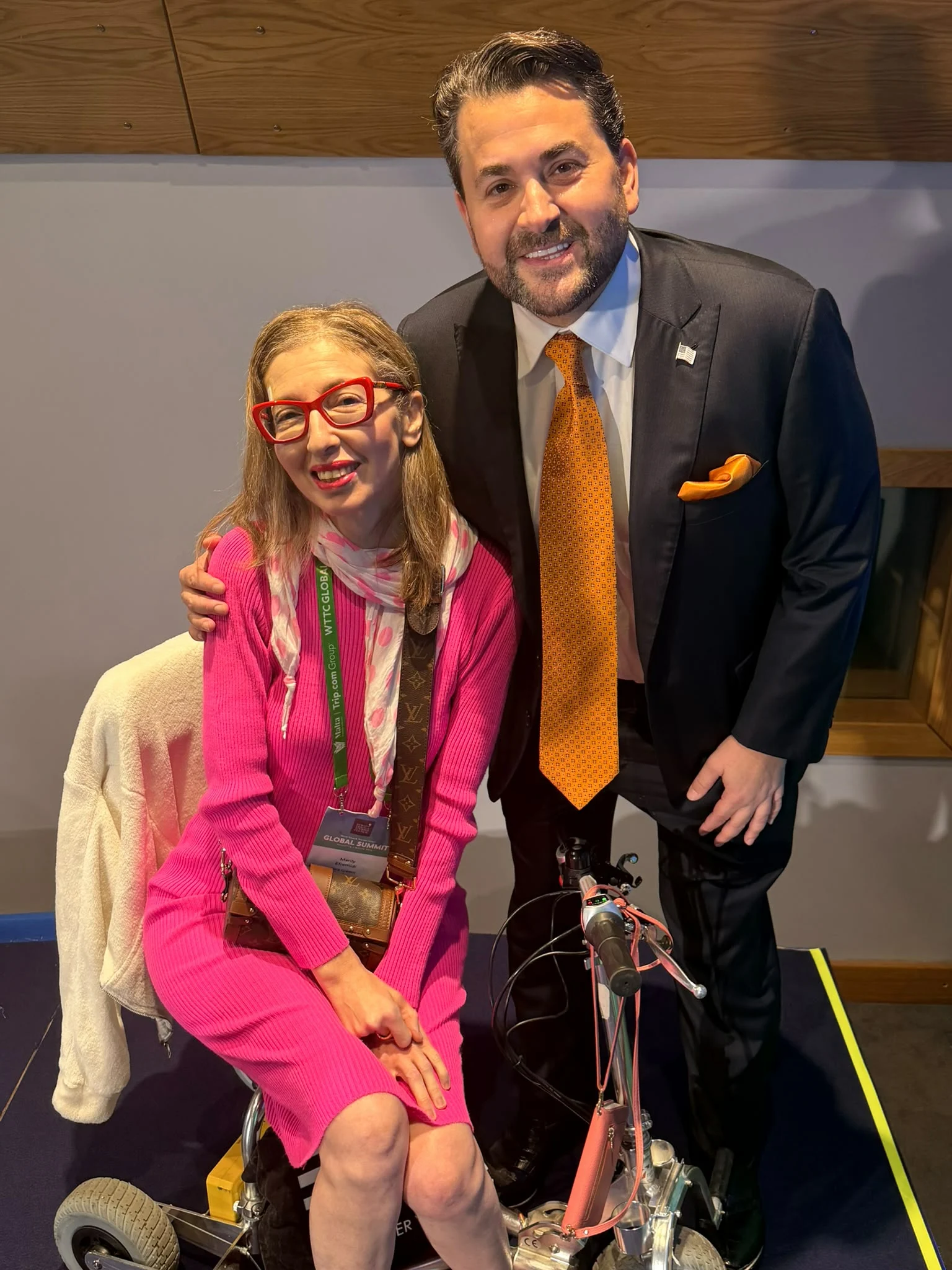
Marily Efremidi from Gala and Marie Claire with Nick Adams